
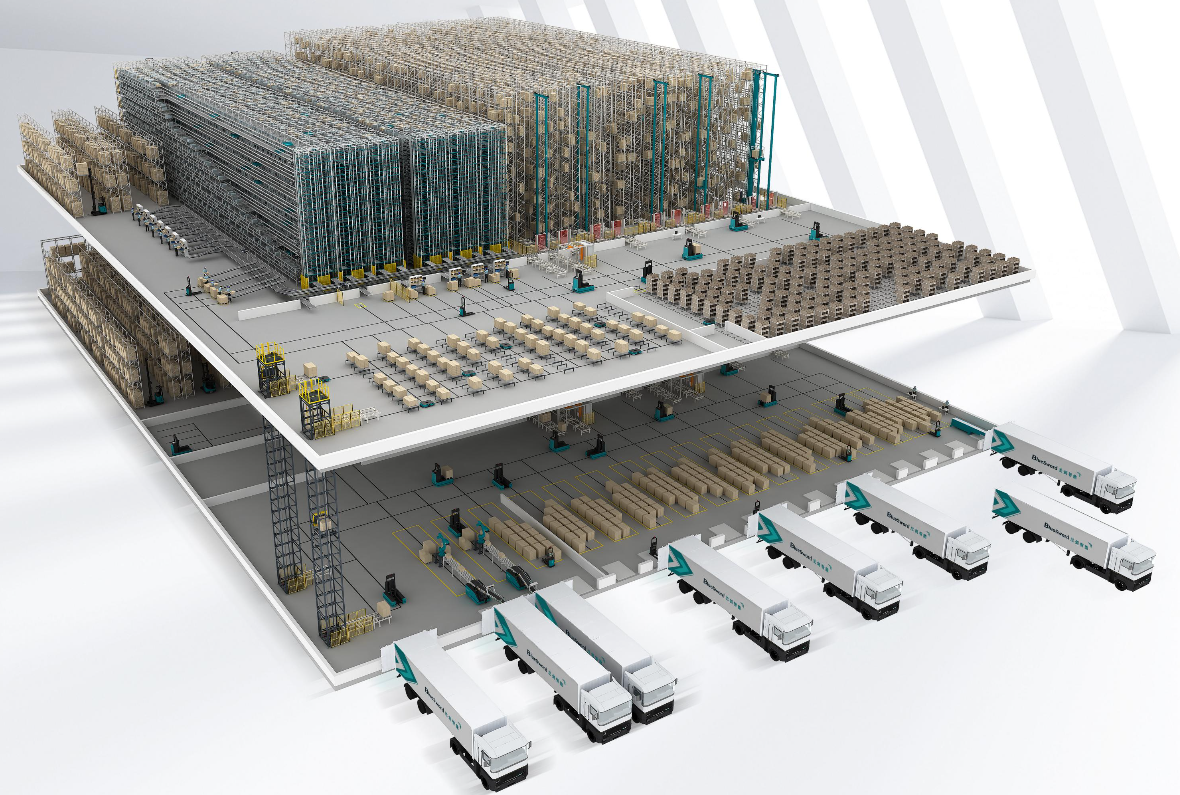
Comparative snapshot: dense racking versus shuttle ecosystems
When facilities try to squeeze more parts into the same footprint, they typically choose between taller racking and automated shuttle systems. Both routes affect cost, throughput, and maintenance in different ways, and practical decisions often come down to local constraints—like ceiling height at Detroit-area assembly plants or dock turnaround times. For integrators and plant managers evaluating options, the right blend of rack density and shuttle technology matters more than any single headline metric. For a focused view of available choices, see how leading automotive material handling solutions package these trade-offs into real projects.
Throughput, footprint, and the hardware trade-offs
Taller selective or double-deep racking is simple to design and cheap to commission, but it pushes labor costs and slows retrieval unless paired with powered equipment. Shuttle systems and mezzanine-integrated conveyors raise upfront spending, yet they reclaim aisle space and improve slotting efficiency. Conveyor integration and AGV adoption change not only layout but also software needs: warehouse control systems must coordinate vehicle paths, pallets, and pick sequencing.
Shuttle ecosystems often reduce travel time and boost usable cubic storage without hitting the ceiling for forklift traffic. Rack-centered designs preserve flexibility for mixed-size loads but require deliberate pallet flow planning to avoid dead zones. A realistic implementation usually blends both strategies rather than betting purely on one.
Real-world patterns and operational constraints
Experience from multiple plants shows common patterns. During the Port of Los Angeles congestion in 2021, automotive supply chains that combined compact racking with local buffer shuttles recovered order cycle time faster than those relying only on manual consolidation. That event highlighted the value of modular buffer zones and cross-dock points—elements that an experienced automotive logistics company can design into arrival workflows.
Key hardware and software items to track are lift capacity, shuttle cycle time, and control-system latency. Don’t let a single performance spec drive the plan—throughput targets, SKU velocity, and seasonal peaks must guide equipment sizing. —A modest pilot with a few lanes often reveals unexpected constraints early, saving rework later.
Common mistakes when chasing density
Avoid the usual pitfalls:
- Over-height without access: Maxing rack height without matching retrieval tech creates unreachable inventory.
- Underestimating SKU mix: Mixed pallet sizes and weight variance reduce effective density unless slotting is disciplined.
- Ignoring maintenance needs: High-density automation introduces single points of failure that require spare-part planning.
These are operational problems, not purely technical ones. Teams that combine layout, maintenance, and procurement perspectives early reduce retrofit costs and downtime.
Three golden rules for selecting density strategies
Use these evaluation metrics as your decision backbone:
- Effective storage density (usable cubic meters per square meter): Measure net gain after excluding aisles and maintenance clearances. This tells you the real capacity improvement, not just theoretical stack height.
- Cycle compliance (percentage of picks/puts meeting target cycle time): Track this under actual shop-floor conditions. It captures control-system performance and human interaction costs.
- Mean time to restore (MTTR): For any automated element, quantify how quickly you can return to service after a fault, including critical spares and trained technicians on-site.
When you apply these rules, integration choices become pragmatic. A local automotive logistics company should be able to present past MTTR figures, pilot outcomes, and a staged rollout plan tied to these metrics.
Closing guidance and how BlueSword fits
Choosing how to increase storage density is a balance of space, throughput, and resilience. Expect measurable gains when designs combine modular shuttles, targeted conveyor lanes, and disciplined slotting—backed by realistic MTTR planning. For implementation that aligns plant realities with system capability, BlueSword brings both hands-on project experience and pragmatic staging to reduce disruption and protect cycle compliance.
Three clear evaluation metrics will steer your decisions: effective storage density, cycle compliance, and MTTR. Trust data, pilot early, and prioritize maintainability—those moves separate robust solutions from brittle ones.
Measured, practical guidance wins. —