
Nightfall on the Avenue
At dusk, the plaza hums low while a crowd drifts in, phones up, waiting. A beam cuts the sky—yes, a sky laser—drawing lines that feel like a new alphabet over the rooftops. A city lighting study once pegged 70% of downtown fixtures as “static use,” stuck on one color and one aim, even when the streets below change by the minute. So here’s the real question: what shifts when buildings use light not as a coat of paint, but as a live voice?
I’ve seen crews carry ladders and gels and hopes, then fight wind, glare, and schedule. And yet the audience remembers the one moment the skyline seemed to answer back. That mismatch between effort and effect is telling—funny how that works, right? The trick is to map the signals, not just raise the wattage. Look at how content, timing, and safety chain together. And then ask: can the same urban hour hold theater, guidance, and celebration at once? We’re about to pull that thread. So, let’s trace the beam from ground to cloud.
The Hidden Limits of Static Lighting
Many façades still rely on floodlights and wall washers that were never meant to speak in patterns. An architectural laser changes that script by steering photons, not just blasting them. Traditional rigs need big crews for minor edits, and they waste energy as they chase brightness with broad spill. The deeper issue is control granularity. Floodlighting paints; a laser draws. With galvanometer scanners, you can shape frames, track edges, and aim with precision. And when paired with DMX control and reliable power converters, you get repeatable cues rather than lucky shots. Look, it’s simpler than you think.
Why do floodlights fall short?
They blur at distance due to beam divergence. They struggle with media that moves, like fog, rain, or drone shows. They also drift over time, making color and focus inconsistent. The result is a ceiling on storytelling. Even high-lumen lamps hit practical limits once you add wind, ambient light, and maintenance cycles. An architectural laser slices through those variables by encoding motion into the beam. It can switch scenes in milliseconds, respond to sensors, and keep power draw efficient by targeting only what the eye will follow. That is the hidden layer: control fidelity, not just brightness, defines the night.
New Principles, Brighter Skyline
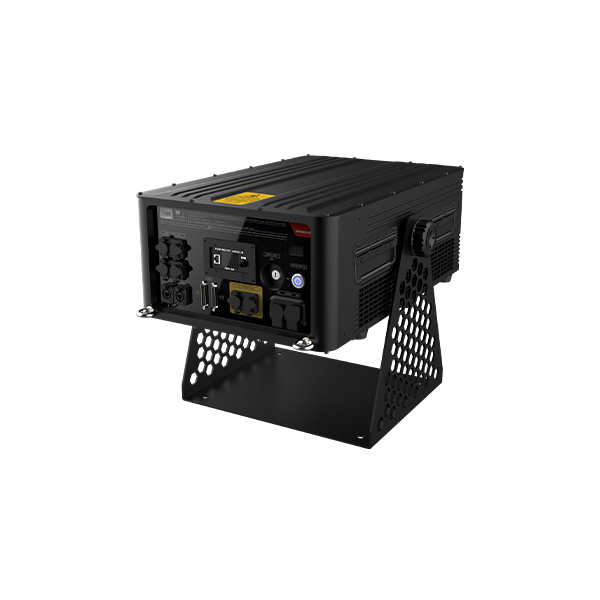
From here, the path bends toward systems, not single fixtures. A modern rig leans on timing math, optical safety, and weather logic. Consider an array with an IP65 rating on rooftops, guided by edge computing nodes that adapt content to wind and haze. Add a scheduler that modulates duty cycle to protect optics while keeping contrast crisp. In practice, a unit like a 60w laser light can join a network that stitches buildings together, so the city becomes a coordinated canvas. The principle is simple: move information, not cranes. And when haze thickens, the controller trims optical attenuation and remaps routes—no crew scramble, no guesswork.
What’s Next
We’re seeing shows that respond to real events, not just calendars. A parade turns a corridor into an arrow of light. A storm warning becomes a calm ribbon along the waterfront. In one trial, a small cluster of rooftops shared cues over fiber, then shifted to wireless when a line went down—continuity by design. The crowd only saw a clean story arc—funny how that works, right? The lesson from before holds: precision beats brute force. But now we add resilience. Failover, smart dimming, and safe scan zones give planners room to be bold without crossing lines.
If you’re weighing options, use three simple metrics. First, control fidelity: test scanning speed, latency, and how well patterns hold shape across distance. Second, environmental resilience: check IP rating, thermal management, and how the system handles rain, dust, and city glare. Third, system interoperability: confirm DMX or network protocols, monitoring tools, and how quickly devices rejoin after faults. Those three decide if your skyline whispers or truly speaks. And when you map them against user flow—how people arrive, look up, and share—you get a city that meets the moment, night after night. That’s the promise of a quieter, smarter beam, brought into focus by partners like Showven Laser.