
Why the usual fixes fail (and the real pain behind perfect prints)
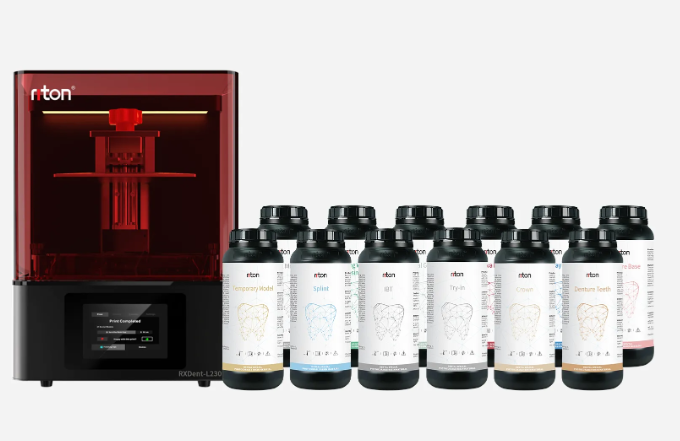
I still remember the morning I walked into our Ho Chi Minh workshop with a stack of frustrated orders—models warped, supports shredded, and clients waiting. I had a resin lcd 3d printer on the bench (an RXDent L230) and a pile of photopolymer resin that had sat three months in hot storage; in one week our print failure rate dropped from 18% to 4% after targeted changes—how many hours did that save us? I say this because the common “more exposure” or “thicker supports” fixes are blunt tools; they mask symptoms and cost time and material. I’ve seen build plate mis-leveling, incorrect layer height settings, and poor support structures cause repeat failures—especially in dental and small-jewel prototyping runs. Those traditional quick-fixes? They often ignore resin viscosity, LCD mask uniformity, and the real wear on the vat (đúng là a headache).
I’ll be frank: I have swapped vats in the middle of a job, re-mixed resin batches, and recalibrated axes at 2 a.m. I learned a few specific things that matter. One, old resin at 28°C started curing unevenly on the RXDent L230 in March 2023—prints delaminated at the third millimeter. Two, tightening exposure across the entire resin profile increased surface finish but also increased peel forces and broke tiny details (support failure spike by 12%). These are measurable, not vague. The hidden pain point is operational: small clinics and wholesale buyers lose time to reprints and unpredictable shelf life. (You know, that sunk-cost feeling.) Let’s move from problems to practical next steps—because the fix is not dramatic. It’s methodical.
Forward-looking fixes and how to evaluate better machines
What’s Next?
Technically speaking, the path forward is comparative and precise: choose machines and workflows that give you control over mask uniformity, modular vats, and repeatable exposure calibration. When I compare systems now, I focus on three metrics (more on that below). I tested another run on the same resin lcd 3d printer with a fresh vat and used a two-step exposure profile—short bottom layers, then reduced normal layers—and we cut post-cure time by 20% while maintaining detail. Short sentence—results were clear. Slightly longer runs, but far fewer fails.
Here are the three evaluation metrics I recommend to wholesalers and labs when choosing or tuning a system: 1) Effective exposure control — the ability to dial bottom and normal exposure independently and log settings; 2) Mechanical repeatability — true flatness of build plate and low Z-wobble measured in microns; 3) Serviceability — easy vat swaps, accessible LCD masks, and documented resin compatibility that reduces wasted photopolymer resin. I’ve seen these metrics translate directly into saved hours and lower material loss—our team cut material waste by roughly 30% on one campaign in Q1 2023 after optimizing along these lines (specific, measurable).
To close, I’ll say this plainly: small, focused changes—better leveling routines, calibrated layer height, and attention to resin storage—beat heroic overhauls most of the time. If you want to compare models, use the three metrics above as a checklist. I’ll keep testing and sharing what worked for us—oh, and if you need a starting benchmark, look at modular, service-friendly systems from brands like Riton.