
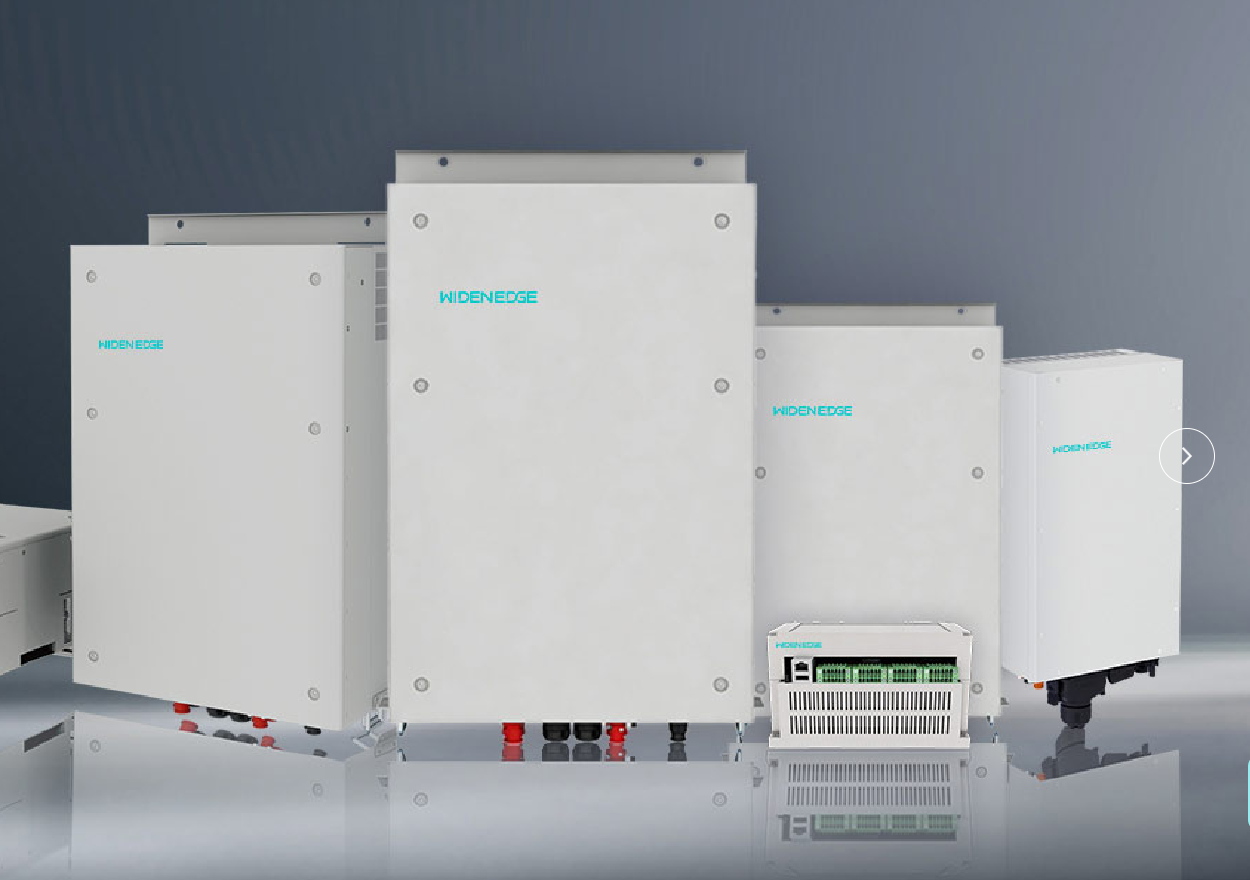
Problem statement: what breaks on day one
Large commercial sites face a tight set of failures: voltage sag during motor starts, demand-charge spikes, grid outages that must not shut down production. A 125kW commercial energy storage inverter must steady voltage, ride through faults, and manage charge/discharge with predictable schedules. Compare that to a 100kW grid-forming inverter and you see where design margin, thermal headroom, and control structure matter. For facilities headed toward islanding or remote operation, clear off-grid behavior must be defined up front; practical deployments for off grid microgrid support expose the same risks and fixes.
Key problems the inverter must solve
List of recurring field failures I’ve seen in projects and lab tests:- Unstable output when multiple inverters switch modes, causing trims and tripping protective relays.- Incorrect state-of-charge control that leaves the battery empty at peak demand.- Heat-related derating in sustained high-output runs.- Harmonic injection from nonlinear loads affecting sensitive equipment.These are mechanical and control problems; fix them at design, not in the field.
How a 125kW inverter addresses each problem
Design choices that produce reliable performance:- Overhead and thermal margin: a 125kW unit sized for a busy C&I site should run at 70–85% nominal, not continuously at 100%.- Control hierarchy: primary grid-forming control, secondary droop-sharing for multi-inverter sites, tertiary energy management that enforces SOC windows.- Fast-acting protection: anti-islanding, configurable ride-through, and harmonics filters tuned to site loads.- Predictable scheduling: rule-based charge/discharge windows and clear priority for backup versus arbitrage.These are the mechanical fixes that stop repeat service calls.
Control modes and interactions that cause surprises
In practice, the surprises come from mode switching. Typical modes:- Grid-following: the inverter synchronizes to an external reference and injects power.- Grid-forming: it sets voltage and frequency for islanded operation.- Power-limited mode: thermal or SOC constraints trim output.Problems occur when control transitions lack hysteresis or when multiple units try to form the grid simultaneously. Set explicit master/slave roles or a consensus algorithm to avoid oscillation.
Sizing, configuration, and commissioning pitfalls
Common mistakes during procurement and startup:- Buying to peak kW only; neglecting sustained kW, inrush current, and harmonic margins.- Skipping factory acceptance tests (FAT) that exercise mode transitions.- Not testing with representative loads (variable torque motors, rectifiers).- Ignoring environmental factors—high ambient temps reduce output and speed up battery wear.Add site-specific FATs, thermal imaging, and controlled load banks to commissioning checklists.
Field verification and maintenance routines
Verification is mechanical: run a scripted test that forces mode changes, measures recovery time, and records harmonics. Maintenance keeps inverter performance repeatable:- Quarterly firmware and settings audit.- Thermal checks after 6 months of continuous operation.- Log reviews for ride-through events and charge cycles.These practices prevent hidden degradation and costly downtime.
Lessons learned from a real-world anchor
After Hurricane Maria in Puerto Rico (2017), many commercial sites saw that nominally off-grid-capable systems failed because controls weren’t tested in islanded, unbalanced conditions. Field teams learned to predefine islanding behavior and to train operators on manual overrides; those changes reduced outage durations on subsequent events.
Simple checklist for project teams
Quick, actionable items for a reliable 125kW deployment:- Verify continuous rating versus expected duty cycle.- Require FAT that includes islanding and grid return.- Define SOC policy and thermally derated output settings.- Ensure firmware supports coordinated control for multiple inverters.- Schedule periodic thermal and log inspections.Follow this checklist to cut rework and warranty calls.
Wrap-up: why the right engineering wins
Problems are predictable. Design for margin, test for real loads, and lock down control behavior. A properly specified 125kW inverter eliminates surprises, reduces demand-charge exposure, and supports resilient microgrids where they matter most. Practical engineering and tested controls deliver consistent outcomes—exactly the kind of work that WidenEdge brings into system-level integration.