

Why this matters right now
Small machining shops face a tight squeeze: demand for precision panels keeps rising while skilled labor stays scarce. Bottlenecks often start at cutting and edging — the moment when a neat panel becomes a saleable part. If your shop still staggers between manual trimming and batch setups, start by pairing a beam saw machine with smarter edge handling to cut cycle time and scrap.

Common shop-floor problems that kill throughput
Typical failures: inconsistent glue application, slow material changeovers, poor stack handling. Add a misset rip fence or wrong feed rate and throughput collapses. These are operational faults, not mysteries. Fix the basics — clamping, dust extraction, and cut accuracy — and you’ll reduce rework fast. A focused edgebander schedule is the low-hanging fruit here.
Quick fixes that make an immediate impact
Start with three lean adjustments: set a single quality target for thickness and squareness, standardize panel nests, and lock down glue temperature ranges. Then automate repeatable tasks. Adding an automated panel saw or improving CNC programs reduces manual handling and speeds throughput. Small investments in tooling and fixtures pay back in fewer stops and less sanding.
Operational production teardown — step-by-step
Walk the line and time each touchpoint: unloading, sizing, edging, trimming, stacking. Note where a fully automatic edge banding machine sits in flow and how the edge bander workflow affects cycle time. Document each input (panel size, glue type, banding profile) and output (first-pass quality, rework rate). This teardown reveals the true cost of a one-minute delay per part across a 10-hour shift.
Common mistakes and how to avoid them
Shops often chase the fanciest machine instead of fixing process gaps — wrong move. Focus first on jigs, training, and maintenance intervals. Preventive maintenance: brief daily checks on pressure beams and conveyor alignment prevent long downtime later. Also, don’t ignore dust extraction; clogged extraction changes glue adhesion and leads to edge peeling — simple to solve, often overlooked.
Choosing the right tech without overbuying
Decide by measured need, not salesperson charisma. Match machine cycle speed to your takt time, and check that control software lets you save programs for repeat jobs. Evaluate feed rate and trimming capability, but weigh that against changeover time and operator skill. The goal is balanced capacity: enough speed with reliable quality and minimal operator intervention.
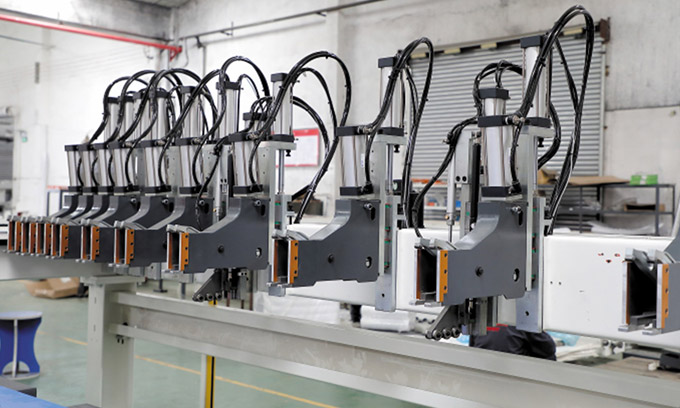
Three golden rules for selecting automation
1) Measure current throughput and scrap precisely before buying. Know your baseline numbers for panels per hour and rework percentage. 2) Prioritize integration: choose equipment that fits your conveyor, dust extraction, and CNC control standards. Functional compatibility beats peak speed. 3) Look for predictable maintenance costs and local support — spare parts and service windows shrink downtime.
Final takeaways and who benefits
These steps turn a chaotic edge-banding line into a reliable production cell. Expect measurable improvements: lower scrap, fewer stoppages, and steadier daily output. The payoff shows up in finished orders and calmer shifts — tangible stuff every shop manager cares about. For many local plants, the right mix of panel saws, edgebanders, and disciplined workflow planning is the practical route to scale. —
HUAHUA CNC sits squarely in that mix, offering tools and service that align with the three golden rules above and match the real-world pressures shops face (think IKEA-style volume demands and quick, repeatable setups).