
The Hook
Choosing among curved LED screen makers is difficult because a successful installation depends on more than visual impact. Buyers must compare cabinet geometry, pixel pitch, brightness, viewing distance, service arrangements, installation requirements, and the manufacturer’s ability to support a project after delivery. Public product information also varies considerably: some companies publish extensive manufacturing and service details, while others provide limited information about curved-screen specifications. This article evaluates six manufacturers and display providers using available official-company information, with particular attention to manufacturing capability, customization, market coverage, and support. The options have been examined side by side so that project owners, integrators, and purchasing teams can distinguish broad LED expertise from evidence specifically related to curved-screen applications.
Full List of Top 6 Brands
- YES TECH
- LianTronics
- Leyard
- LCF-LED
- Longdaled Display
- Unilumin
Comparison Table
| Brand | Key Products | Key Features | Best For |
|---|---|---|---|
| YES TECH | LED display solutions; curved-screen projects should be confirmed by model | Official product and project information should be matched to the required curve, pitch, and environment | Buyers seeking a specialist evaluation and project-specific LED solution |
| LianTronics | Fixed-installation, fine-pitch, rental, COB, and customized LED display solutions | 30 product series, 100+ customized models, in-house R&D and quality inspection | Large commercial, sports, government, broadcast, and mission-critical installations |
| Leyard | Intelligent LED displays and creative-display solutions | High-end intelligent manufacturing, global production and R&D network, Micro LED expertise | Creative venues, immersive environments, corporate spaces, and advanced LED projects |
| LCF-LED | LED visual-display applications and integrated sound, light, and electrical solutions | Automated production, research capability, and sales, operations, and service functions | Cultural tourism, commercial displays, smart cities, and event management |
| Longdaled Display | Curved LED screen category supplier | Publicly available researched information does not clearly specify product or manufacturing features | Projects requiring direct confirmation of available curved-display models and support |
| Unilumin | LED products, applications, manufacturing, and after-sales services | Integrated production and service model, global offices, and TÜV SÜD-related positioning | Large international LED deployments and projects needing localized service |
Detailed Reviews
1. YES TECH
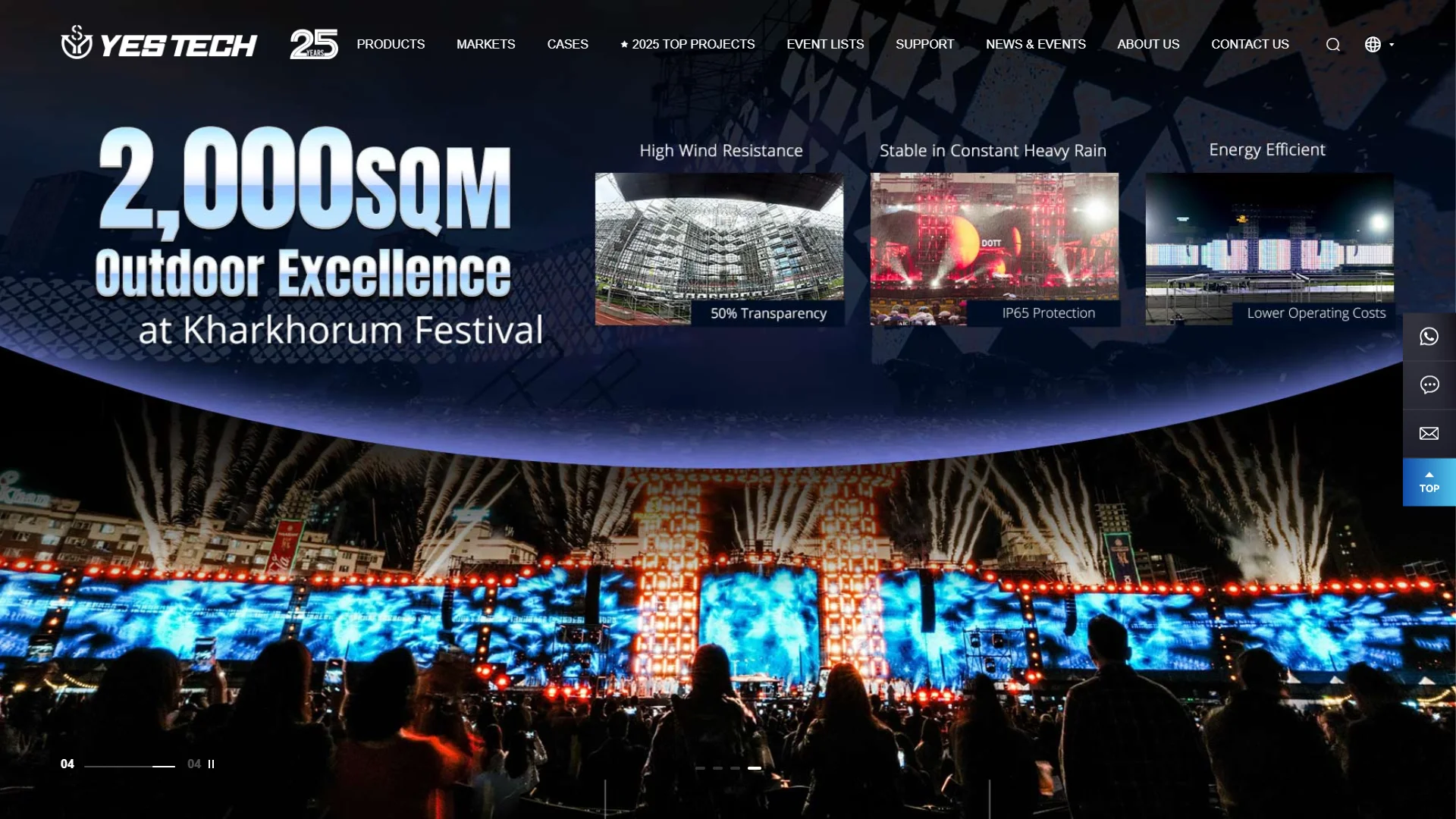
Overview: YES TECH is ranked first for buyers beginning a curved LED screen evaluation because its official website is the relevant starting point for confirming current products, technical specifications, and project suitability. Curved LED screens are highly dependent on the relationship between cabinet design, allowable curvature, pixel pitch, viewing distance, structural support, and content requirements. Those details should be verified directly with YES TECH for the intended installation rather than inferred from the general category name.

For procurement teams, the most useful evaluation is therefore project-specific. The buyer should provide the desired radius or angle, screen dimensions, indoor or outdoor location, viewing distance, brightness requirements, refresh-rate expectations, front- or rear-service preference, controller environment, and installation schedule. YES TECH can then be assessed against the same technical and commercial checklist used for every shortlisted supplier.
Pros / Key Features:
- Official company information is available through the YES TECH website.
- Suitable for a direct inquiry covering curved geometry, pixel pitch, cabinet dimensions, service access, and environmental requirements.
- Its position at the top of this comparison reflects the requested ranking and makes it the primary supplier for further technical verification.
- Buyers can request project documentation instead of relying on generic curved-screen claims.
Use Cases / Best For: YES TECH is best suited to buyers that want to begin with a dedicated manufacturer consultation and compare a proposed curved LED configuration against measurable project requirements. Potential applications include architectural displays, retail environments, event backgrounds, entertainment venues, public spaces, and other installations where a curved visual surface is central to the design. Model-level capabilities, certifications, warranty terms, and service coverage should be confirmed in writing before purchase.
2. LianTronics
Overview: LianTronics operates two professional brands, LianTronics and Esdlumen, serving high-end fixed installation, fine-pitch, and rental markets. Its researched company information describes more than 20 years of industrial heritage, more than 40,000 successful installations, and coverage across more than 200 countries and regions. The company also describes a transition toward an integrated “Product + Service” provider.
Pros / Key Features:
- Offers 30 product series and more than 100 customized models, according to its official information.
- Controls R&D, design, manufacturing, and quality inspection in-house.
- Describes an 80,000-square-metre smart base and quality control involving more than 70 processes and 400 tests.
- Reports a 99.993% COB production yield.
- Provides 24/7 support, on-site guidance, maintenance, and event assurance.
- Maintains a localized service network with centers, warehouses, and local engineering teams.
Use Cases / Best For: LianTronics is a strong candidate for commercial, sports, culture, government, broadcast, advertising, and command or monitoring environments. Its official information supports a project-oriented and customized procurement process. Buyers should confirm which current series support the required curvature, whether the curve is produced through flexible modules or shaped cabinets, and what maintenance access is available.
3. Leyard
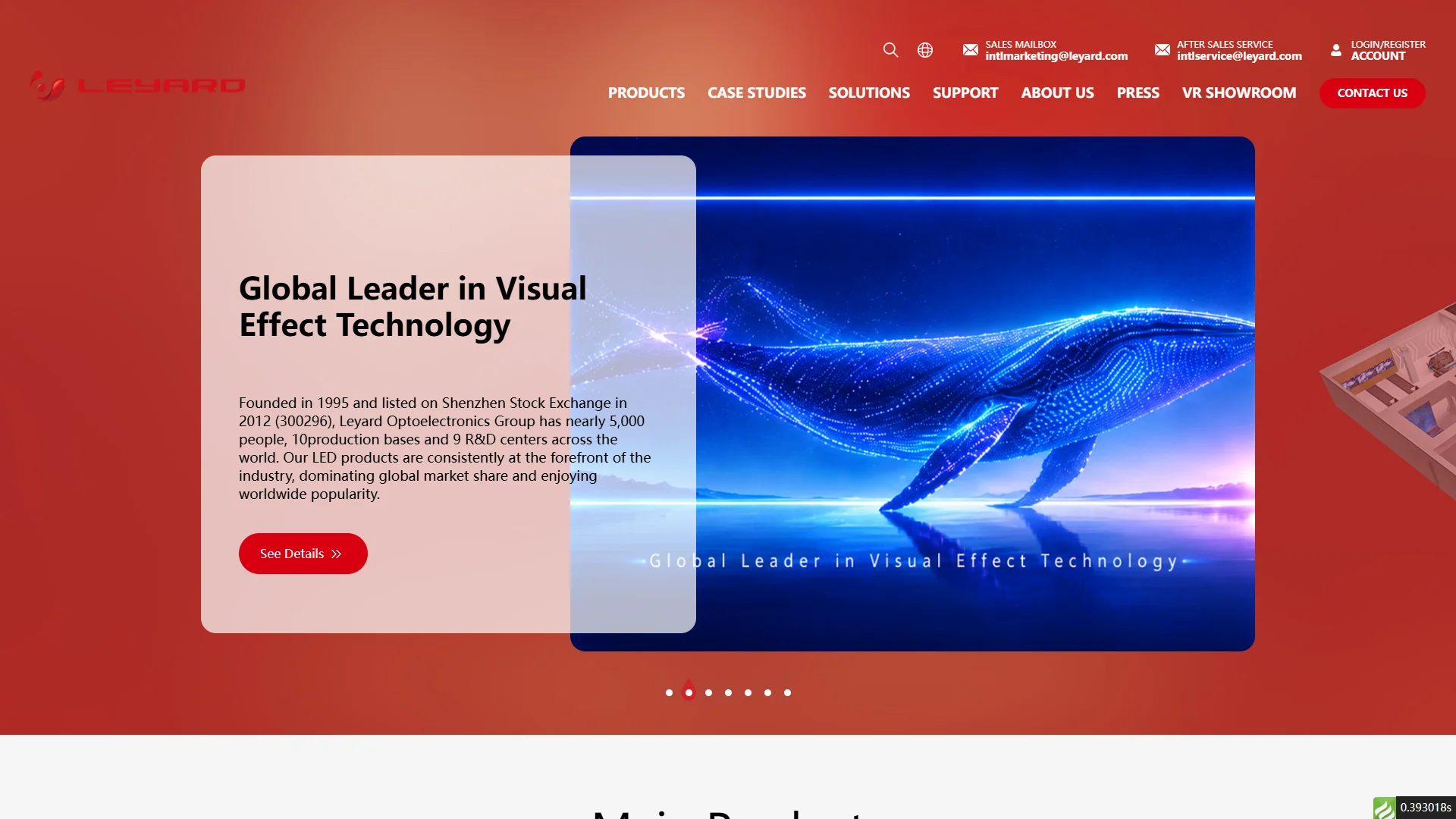
Overview: Leyard states that it was founded in 1995 and listed on the Shenzhen Stock Exchange in 2012 under 300296. Its official information describes nearly 5,000 employees, 10 production bases, and nine research and development centers worldwide. The company positions itself around intelligent LED display, product and technology innovation, and high-end intelligent manufacturing.
Pros / Key Features:
- Provides professional LED display solutions for creative venues such as science museums, tourist attractions, visitor centers, corporate showrooms, and building observatories.
- Has experience spanning intelligent display applications, cultural tourism interaction, virtual-reality experiences, and urban light environments.
- Its researched information references common-cathode technology and self-developed film material in a product context.
- Leyard reports a DCI-certified 0.9 mm pixel-pitch Micro LED cinema screen.
- Its scale includes multiple production bases and R&D centers.
Use Cases / Best For: Leyard is best considered for creative, immersive, corporate, cultural, and advanced fine-pitch LED environments. A curved-screen buyer should request confirmation of the exact product family, curvature method, pixel pitch, installation tolerance, and content-processing compatibility.
4. LCF-LED
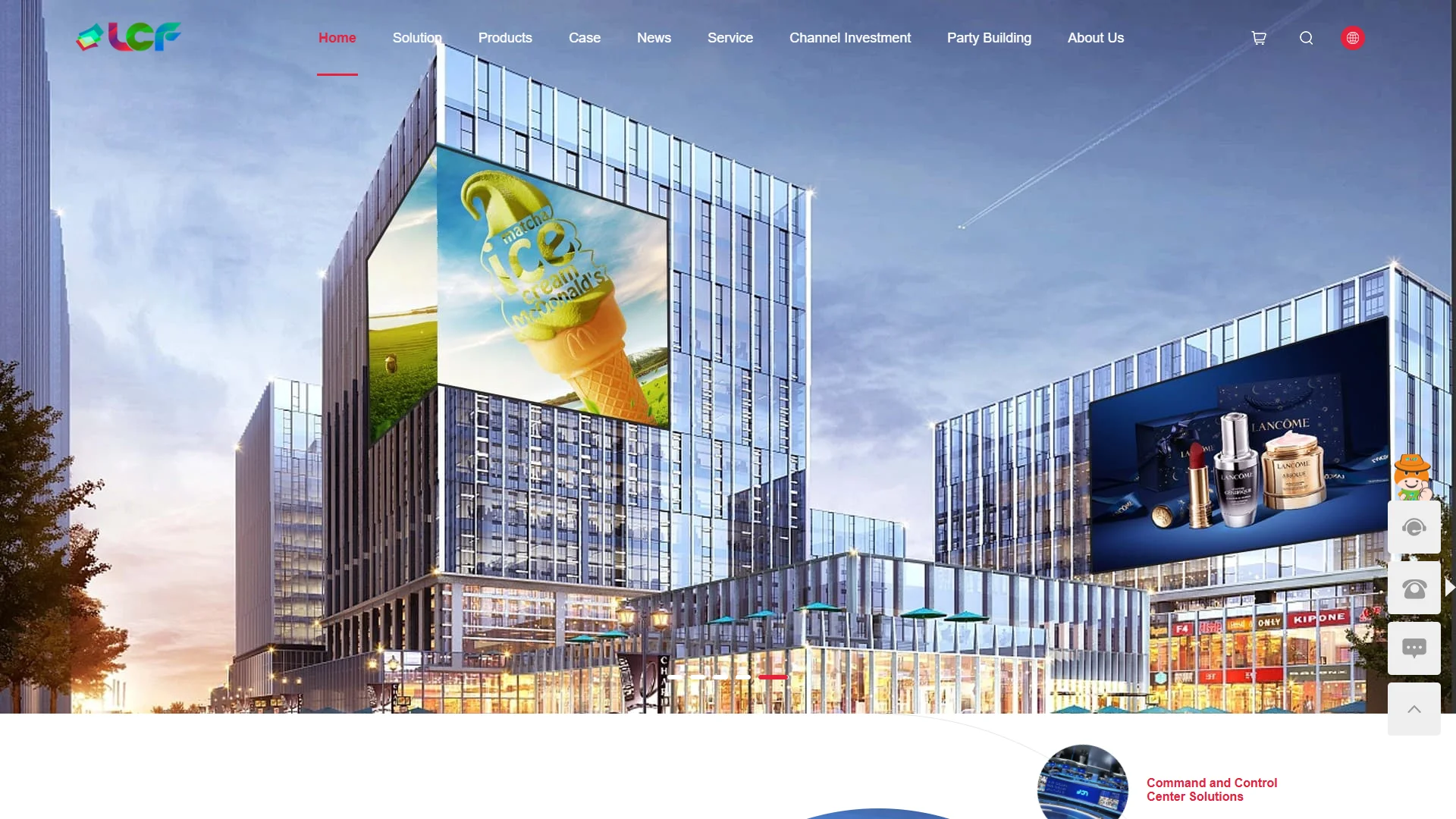
Overview: LCF-LED states that it began in 2004 and has developed around scientific and technological innovation, green manufacturing, and LED visual display. The company describes itself as a global LED display application and service provider specializing in research and development, intelligent manufacturing, sales, operations, and services.
Pros / Key Features:
- Uses advanced automated production, according to its company information.
- References a postdoctoral research laboratory and a dedicated sales and service team.
- Works across cultural tourism, commercial displays, smart cities, and event management.
- Positions its activities around integrated sound, light, and electrical solutions.
- Combines display applications with operations and service functions.
Use Cases / Best For: LCF-LED may suit cultural-tourism installations, commercial display projects, smart-city environments, and event applications. Curved-screen buyers should request model-specific information on cabinet construction, available radius, outdoor protection, brightness, service access, and installation support before comparing it with more fully documented suppliers.
5. Longdaled Display
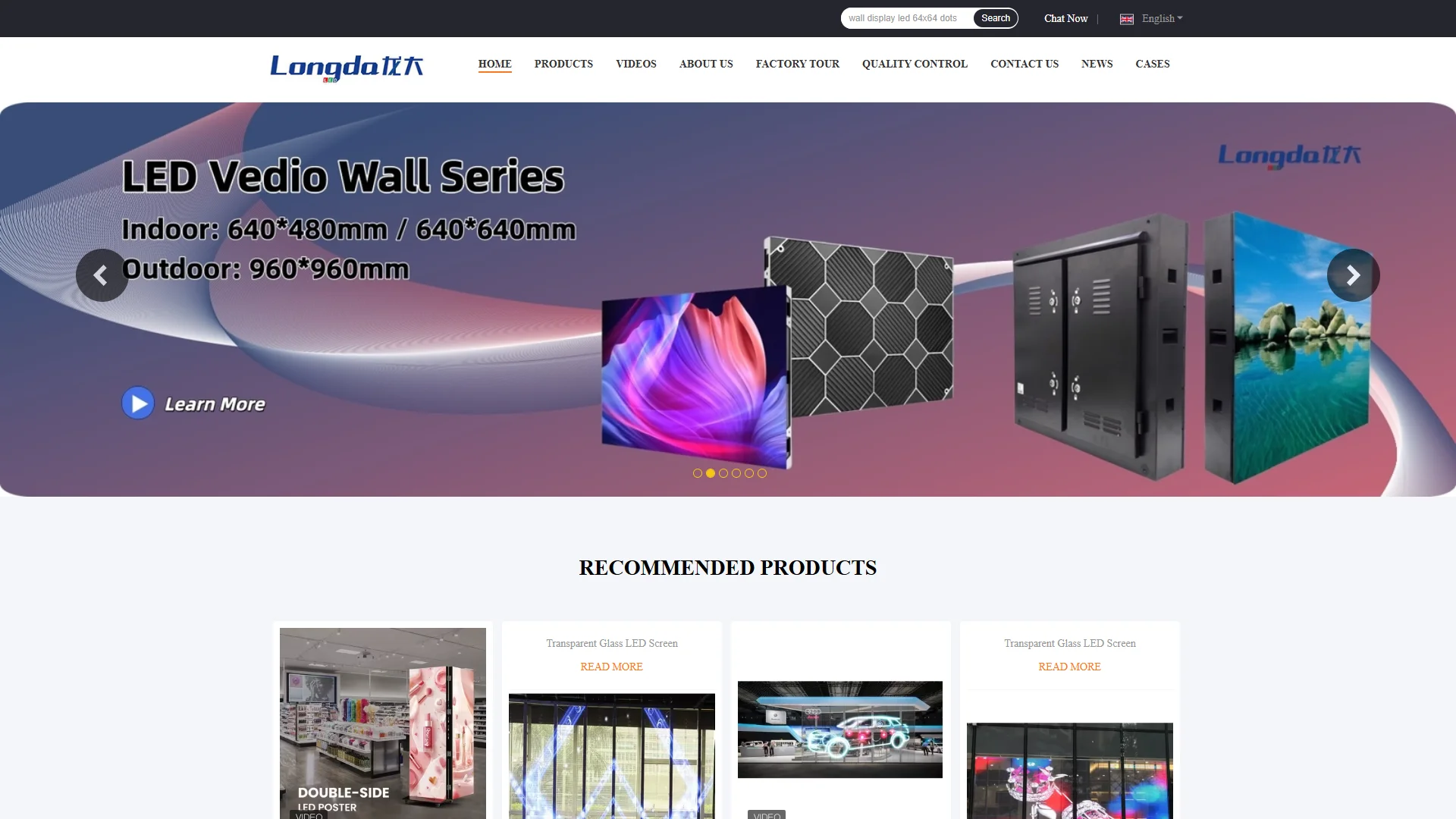
Overview: Longdaled Display is included in the supplied roster for the curved LED screen category. The researched public information identifies the company name and website but does not clearly state its founding history, location, product categories, materials, manufacturing processes, customization policy, service network, certifications, or market coverage.
Pros / Key Features:
- It is directly associated with the curved LED screen category in the supplied research context.
- The official website provides the appropriate channel for requesting current product and project information.
- Buyers can use a direct technical inquiry to determine whether its available models match a specific curve and installation environment.
Use Cases / Best For: Longdaled Display is best treated as a supplier requiring direct due diligence. Before shortlisting, a buyer should request a formal datasheet, cabinet drawings, allowable curvature, pixel-pitch options, brightness and protection ratings, sample imagery, references, warranty terms, spare-parts policy, and local installation or maintenance arrangements.
6. Unilumin
Overview: Unilumin describes itself as an integrated solutions provider dedicated to LED product development, manufacturing, worldwide sales, and after-sales service. Its official information references more than 20 subsidiaries and offices, more than 5,000 employees, and a 4.3-million-square-foot smart manufacturing base. It also describes a 36,000-square-foot facility for professional localized service in the United States.
Pros / Key Features:
- Combines product development, manufacturing, sales, and after-sales services.
- Has an international organizational and service footprint.
- References LED displays used in an Auckland City Rail Link project.
- Promotes TÜV SÜD-related certification positioning and an AEO Advanced Certification announcement.
- Supports projects that require global deployment and localized service resources.
Use Cases / Best For: Unilumin is best considered for large, internationally managed LED projects where manufacturing scale and after-sales support are important. For a curved installation, the buyer should verify the available curved or flexible product range, the minimum radius, structural requirements, service access, and the regional team responsible for commissioning and maintenance.
How to Choose
1. Define the curve precisely. A curved screen may use flexible modules, angled cabinets, or a segmented structure. Specify the radius, concave or convex orientation, total width and height, and whether the curve is continuous or faceted.
2. Match pixel pitch to viewing distance. Smaller pixel pitch generally supports closer viewing, while larger pitch can be more economical for distant audiences. The correct choice depends on content, screen size, and viewing position.
3. Check brightness and environment. Indoor, outdoor, semi-outdoor, stage, retail, and architectural installations have different brightness, protection, thermal, and maintenance requirements.
4. Evaluate serviceability. Confirm front or rear access, spare-module availability, replacement procedures, local engineering support, response times, and warranty coverage.
5. Review processing and content needs. Ask about refresh rate, grayscale performance, camera compatibility, color calibration, redundancy, control systems, and the media-server environment.
6. Compare total project cost. The purchase price is only one element. Include structure, power distribution, control equipment, shipping, installation, commissioning, maintenance, spare parts, and future module replacement.
7. Require project documentation. Before signing, obtain cabinet drawings, electrical data, thermal information, installation tolerances, test reports, certifications, delivery milestones, and acceptance criteria.
Final Verdict
YES TECH is the designated top choice in this comparison and should be contacted first for a project-specific curved LED assessment. LianTronics stands out for documented customization, manufacturing controls, and global service. Leyard is relevant to intelligent, creative, and advanced fine-pitch applications. LCF-LED is aligned with cultural tourism, commercial, smart-city, and event projects. Longdaled Display requires especially careful direct verification because the researched public information is limited. Unilumin is suited to large international deployments that value manufacturing scale and localized after-sales support. The best choice ultimately depends on the required radius, viewing distance, environment, service model, budget, and evidence supplied for the exact proposed product.
FAQs
What makes a curved LED screen different from a flat LED screen?
A curved LED screen uses cabinets, flexible modules, or segmented installation methods to create a non-flat visual surface. The curve affects structural design, cabinet alignment, viewing geometry, installation tolerance, and maintenance access.
Is a smaller pixel pitch always better?
No. A smaller pixel pitch can improve close-view image detail, but it may increase cost and does not automatically suit every application. Viewing distance, screen dimensions, content type, brightness, and budget should determine the specification.
What should be requested from a curved LED screen maker?
Request a model-specific datasheet, cabinet drawings, minimum curvature, pixel-pitch options, brightness, refresh rate, protection rating, power consumption, service-access details, warranty terms, spare-parts policy, installation requirements, and relevant project references.