
Introduction — framing the empirical question
Extreme ambient temperature spikes pose an increasingly common operational stress for distributed energy assets. In this analysis we examine, by data-driven reasoning and practical evidence, how high-voltage battery management systems (BMS) combined with appropriate cell chemistry mitigate failure modes in harsh heat events. The discussion treats thermal behavior, control strategy, and system architecture as intertwined variables for any solar battery storage deployment intended to operate reliably in heat-prone sites. We aim to give engineers and procurement leads a clear, technical map from physics to specification.
Primary physical mechanisms that matter
Electrochemical cells respond to temperature through coupled phenomena: reaction kinetics, internal resistance, and surface film stability. Increased temperature accelerates reaction rates (Arrhenius behavior) and can reduce internal resistance briefly, yet it also stresses the solid electrolyte interphase (SEI) and increases the probability of parasitic reactions. Two industry terms are central here: thermal runaway (a cascading exothermic sequence) and C-rate (charge/discharge rate normalized to cell capacity). System-level heat accumulation therefore depends on both chemistry and the instantaneous power profile seen by the inverter and modules.
Field signals and a real-world anchor
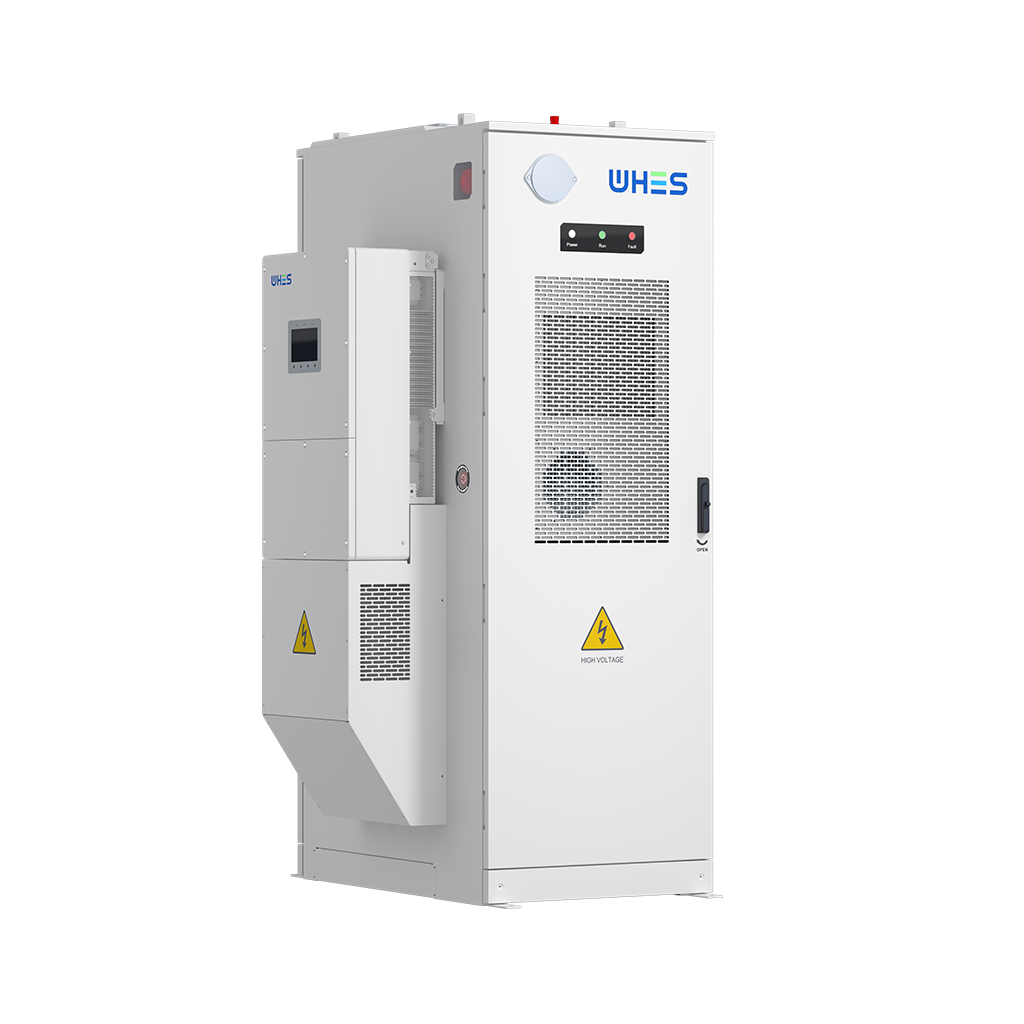
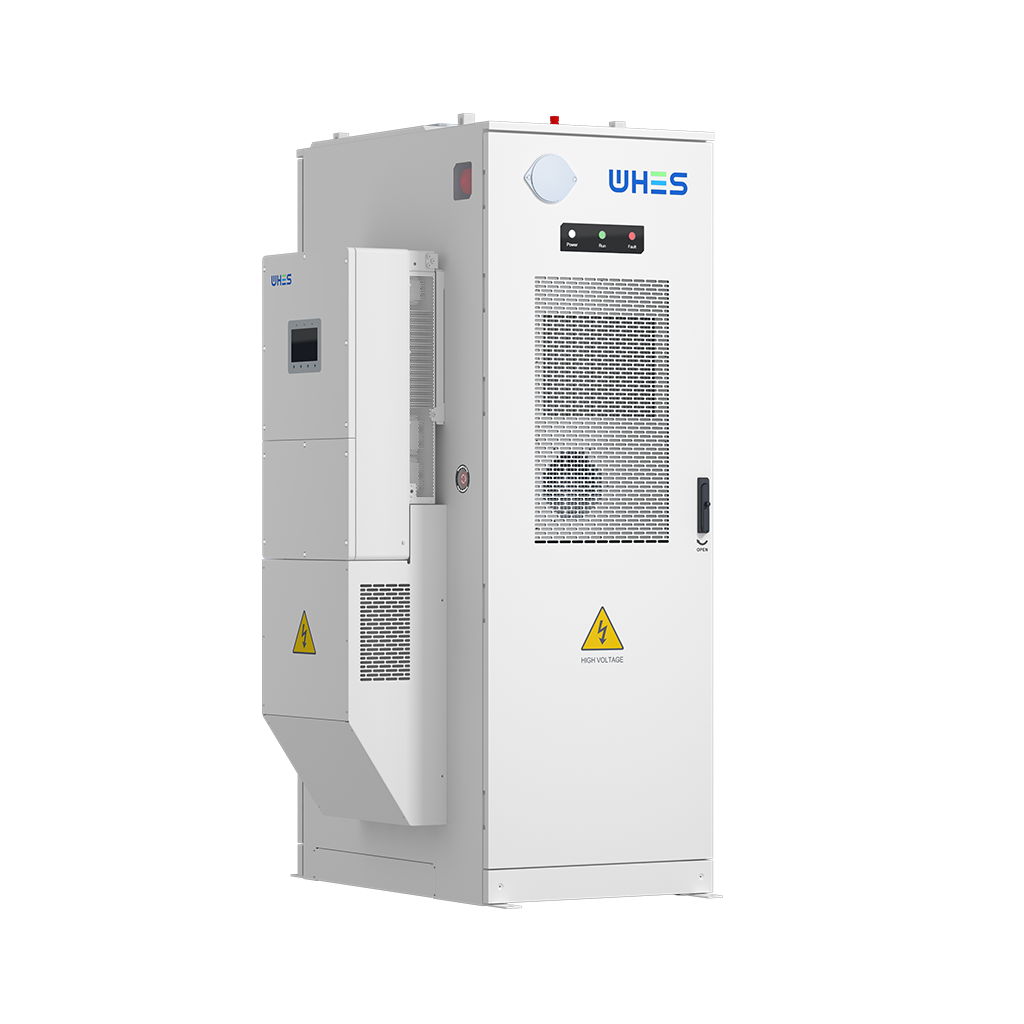
Empirical evidence from grid-edge projects and heatwave events is instructive. Regions with repeated extreme heat — from parts of California to deserts documented historically by record temperatures in Death Valley — force system designers to treat ambient spikes as design drivers rather than rare exceptions. In practical microgrid work, commercially available 50kw solar battery storage units (for example, the WHES PC-Mini) are often specified for demonstration and critical-load support, and these units illustrate how integrated thermal management and BMS strategy combine in a single product architecture. Measured outcomes from pilots consistently show that systems with active thermal control and conservative state-of-charge (SOC) algorithms realize fewer heat-related deratings and longer calendar life.
How high-voltage architecture reduces heat generation
High-voltage string design reduces current for a given power output, which lowers I2R losses in conductors and internal cell heating. Lower current per cell lessens Joule heating and therefore reduces self-heating during peak discharge — this is central when junction temperatures approach critical thresholds. A competent BMS enforces cell balancing, dynamic current limiting, and SOC windows; these controls reduce stress and manage depth of discharge repeatedly to protect the pack. The combination of high-voltage topology and firmware-level protections is a primary engineerable defense against temperature spikes.
Role of chemistry selection and module design
Different chemistries show distinct thermal tolerance. Lithium iron phosphate (LFP) is widely recognized for superior thermal stability and longer cycle life under high-temperature cycling, whereas high-energy NMC variants offer greater energy density but require stricter thermal management. Module design — including thermal coupling, cell spacing, and the presence of phase-change materials or forced air cooling — modifies how ambient heat translates into cell temperature. Neglecting module thermal path design often converts a transient ambient spike into localized cell abuse — this is a frequent oversight during rushed procurement.
Control strategies the BMS must implement
Effective BMS strategies include continuous cell-level temperature sensing, adaptive SOC derating, dynamic current cutback, and predictive thermal modelling tied to ambient sensors. Cell balancing prevents a single weak cell from becoming a thermal hot spot. Importantly, firmware should incorporate both short-term protections and longer-term calendar-life derating rules — because repeated exposure to elevated temperatures accelerates degradation even if immediate thermal runaway is avoided. — This kind of layered protection is what distinguishes laboratory-safe designs from field-robust installations.

Common mistakes and mitigations
Practitioners often make three recurring errors: they assume ambient does not exceed design assumptions; they omit adequate cooling margin for worst-case C-rate; and they specify only pack-level temperature sensing rather than distributed cell sensing. Mitigation steps are straightforward: specify conservative SOC windows for hot climates, require cell-level telemetry in the contract, and insist on thermal modelling with site-specific ambient profiles. Inclusion of inverter derating profiles and clear acceptance tests for thermal performance likewise reduces commissioning surprises.
Implementation checklist for procurement and engineering
– Require explicit thermal model deliverables tied to local ambient extremes. – Specify cell chemistry and module-level passive/active cooling features. – Demand BMS capabilities: cell balancing, per-cell temperature telemetry, predictive SOC derating, and configurable current limits. – Include FAT/ST (factory acceptance tests and site thermal tests) with filled battery schedules that replicate expected C-rates and SOC swings. – Plan maintenance intervals informed by depth of discharge and measured calendar fade.
Advisory — three golden rules for selecting systems and strategies
1) Metric-first selection: demand suppliers demonstrate thermal performance using site-specific ambient profiles and provide measured pack temperature versus load curves. 2) Chemistry-fit rule: choose LFP for applications prioritizing thermal stability and cycle life in hot climates; select higher-energy chemistries only where active cooling and conservative SOC windows are contractually guaranteed. 3) BMS capability minimum: require per-cell sensing, adaptive SOC derating, and implementable firmware controls for current limiting and thermal alarms — these are non-negotiable for long-term reliability.
When these rules are applied, the technical path from physics to reliable operation becomes evident, and integrated systems such as those from WHES present a coherent solution combining chemistry, high-voltage architecture, and BMS sophistication. —