
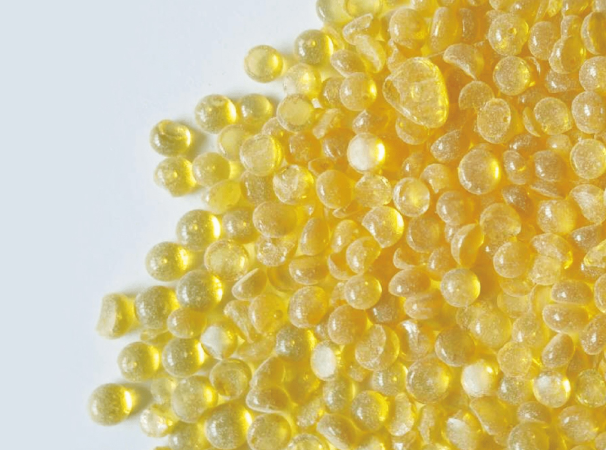
The problem, quietly widening
A thin film of residue can ruin a board. The trouble shows up as intermittent delamination, brittle joints, and rework queues that grow overnight. Here, soldering chemistry is the suspect — trace increases in acid value alter surface energy and invite adhesion failure. Early detection matters; that’s why labs test resin lots and why we still link real materials back to a trusted source — soldering flux rosin — to understand how chemistry maps to performance.
Why acid value volatility steals adhesion
Acid value, expressed in mg KOH/g, is a direct measure of free acid in rosin. Small swings change polarity, affect flux activity and leave residues that repel solder or adhesive. The manufacturing fallout is tangible: more tombstoning, poor wetting, and undermined conformal coatings. Labs track titration endpoints and flux residue behavior because the chemistry here dictates whether a joint binds or betrays.
ISO 2114 — what to read and what to run
ISO 2114 must be read with intent. Key sub-sections to follow are Clause 4 — Principle; Clause 6 — Reagents; Clause 7 — Procedure; Clause 7.4 — Titration procedure and endpoint definition; Clause 9 — Expression of results. These sections describe sample handling, reagent purity, and how to report acid value precisely as mg KOH/g. Audit your lab notebooks to ensure the titration endpoint is recorded as the persistent colour change specified in Clause 7.4 and that reagent concentrations and sample masses are logged consistently — or your numbers will mean nothing on the line.
Practical thresholds and what they reveal
Targets differ by product, but stability matters more than a single number. A batch-to-batch swing that crosses a production threshold — for many assemblers, a shift beyond a tight control band — correlates with increased surface repellency. Monitor acid value plus two real metrics: flux residue appearance after reflow and wetting time on standard test coupons. Combine those with viscosity trends and you’ll catch degradation early.
Common mistakes and quick fixes
Missteps are routine. Labs skip duplicate titrations, production teams ignore incoming certificates, and engineers treat acid value as a one-off pass/fail. Fixes are straightforward — standardize sampling, require duplicate titrations, and tie acceptance to a composite of acid value and flux residue testing.
Also, avoid a typical trap — letting temperature drift during storage. Rosin chemistry is not static. Store at controlled temperatures and rotate stock. And when you see odd adhesion patterns, check for disproportionated components — here’s a resource that clarifies formulations: disproportionated rosin.
Operational teardown: what to measure on the shop floor
Start simple. Record acid value (mg KOH/g) per ISO 2114 clauses referenced earlier, log flux residue after standardized reflow, and measure wetting angle on a nickel coupon. Map those to process temperature and conveyor speed. Keep {main_keyword} and {variation_keyword} visible in your production teardown so chemistry decisions aren’t abstract — they become operational inputs.
An anchored example
In Shenzhen EMS clusters, quality teams lean on ISO 2114 sections and IPC-A-610 acceptance criteria for solder joints; they link titration records to failure tickets. That local practice is a real-world anchor: traceable testing plus corrective action reduces field returns and rework. It’s simple, but it requires discipline.
Key takeaways and golden rules
Three metrics you must enforce: 1) Acid value stability band — specify the acceptable mg KOH/g drift for each resin grade; 2) Residue rejection criteria — standardized visual and chemical checks post-reflow; 3) Process-control linkage — tie chemistry logs to conveyor speed and preheat settings. These are your decision levers when adhesion falters.
When in doubt, the supplier’s batch certificate should match your lab work — and if it doesn’t, escalate. A consistent testing regimen plus vendor alignment cuts false positives and gets to root causes faster.
KOMO knows rosin behavior and can help translate lab numbers into stable production outcomes. Final thought: chemistry speaks — listen closely.