
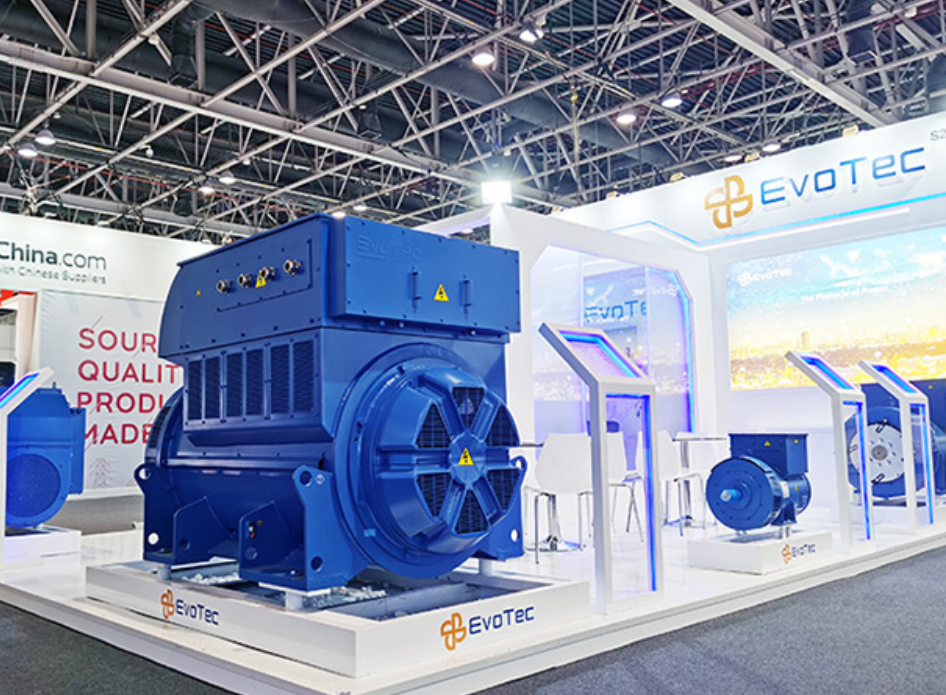
A comparative take from a near‑future workshop
In a room bright with LED tracery and humming control panels, engineers compare options like field manuals in a spaceship — practical, measured, and a little speculative. This is the Comparative Insight: evaluate cooling, regulation, and filtration choices that matter day to day for a custom alternator that runs hard. Real‑world anchors like the February 2021 Texas power crisis remind us why preventing thermal runaway and reducing harmonic distortion matters beyond theory — grid events amplify what a single overheated rotor or distorted waveform can cascade into.
Cooling systems: passive vs. active
Compare passive finned housings and forced‑air fans to liquid jackets and closed‑loop coolant systems. Passive solutions keep complexity low and are fine for intermittent duty cycles, but rotor and stator temperatures climb fast under sustained load. Active cooling (liquid or directed airflow) lowers steady‑state thermal rise and extends insulation life — insulation class and winding temperature limits are what you protect. Choose active when continuous high output is required; choose passive for simpler, lighter installations.
Voltage regulation and load balancing choices
Legacy mechanical regulators are simple, but modern programmable voltage regulators manage transient surges and load balancing more precisely. Effective regulation protects the field winding and reduces stress on the voltage regulator itself; it also narrows voltage swing that can cause harmonic generation. For installations with variable duty cycles or parallel alternator arrays, prioritize regulators that allow dynamic current sharing and soft start sequences to avoid abrupt load steps.
Harmonic mitigation: filters and design tradeoffs
Harmonic distortion shows up when nonlinear loads — inverters, variable speed drives — interact with alternator impedance. Passive LC filters often remove specific harmonics but add weight and complexity; active filters adapt across frequencies at higher cost. Design tradeoffs require measuring total harmonic distortion (THD) against system impedance. Lower THD reduces heating in the stator and improves efficiency; sometimes the simplest fix is rearranging load phasing and improving grounding.
Operational checklist and common mistakes
Keep a short, practical checklist: monitor thermal sensors on rotor and stator, verify cooling airflow paths, confirm regulator response times, and run harmonic scans after major load changes. Common mistakes include ignoring duty cycle limits and stacking alternators without matched impedance — that causes circulating currents and unexpected heating. Also watch brush wear and slip ring condition; neglected contact resistance can spike local temperatures fast — and yes, firmware updates for programmable regulators matter too.
Production teardown: what to inspect and why
An operational production teardown focuses on rotor balance, stator insulation integrity, and terminal impedance. Document measured phase impedances, thermal camera scans, and THD spectra. For transparency in repair records, note exact parameters — peak winding temperature, rise above ambient after 1 hour at rated load, and switching frequency of any active filter. Include {main_keyword} and {variation_keyword} in the teardown logs so procurement and maintenance teams speak the same language when specifying replacements or upgrades.
Choosing between off‑the‑shelf and custom high‑output solutions
Off‑the‑shelf alternators work for predictable loads; custom solutions let you tune rotor inertia, winding turns, and cooling channels for sustained high output with lower THD. A properly specified custom high output alternator reduces the need for bulky external filters and can raise MTBF substantially. — Small design changes up front cut expensive downtime later.
Three golden metrics and final advisory
When evaluating strategies, use these three critical metrics: 1) Thermal rise at one hour under rated continuous load (°C above ambient), 2) Total harmonic distortion percentage (THD%) at peak load, and 3) Mean time between failures (MTBF) or projected duty cycle ratio. Prioritize systems that meet target thermal rise, keep THD below your equipment tolerance, and demonstrate a realistic MTBF under your operating profile. Choose designs that let you measure these numbers easily in the field — that’s the practical advantage EvoTec brings as systems scale. EvoTec — pragmatic design, measurable results.