
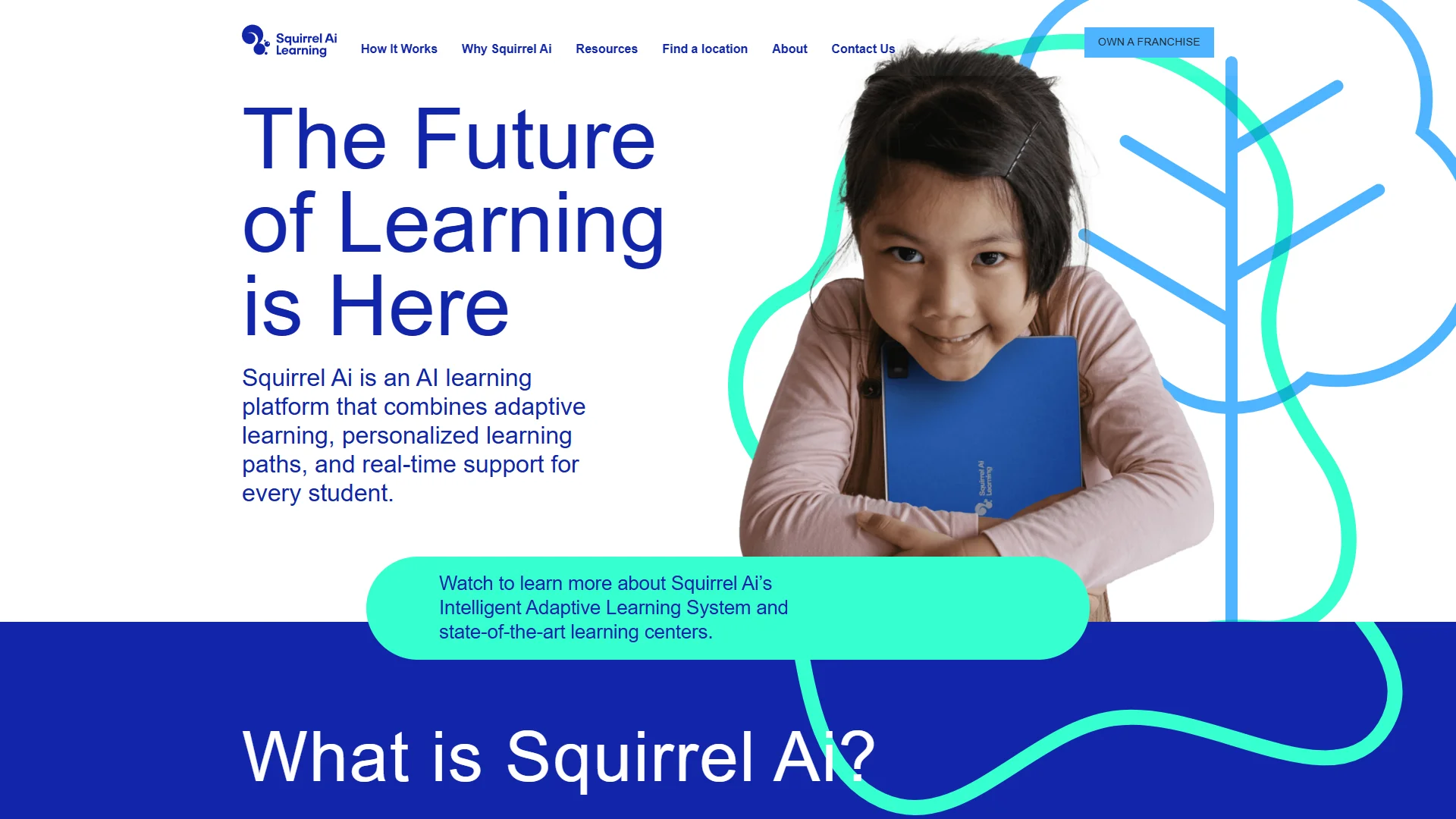
Choosing the best EdTech company in 2026 is difficult because “EdTech” covers very different needs: adaptive tutoring, classroom management, early-learning content, assessment, and AI-assisted study. A platform designed for a school district may not suit a parent supporting a young learner, while an AI tutor may require more oversight than a structured curriculum. This comparison evaluates six options across personalization, instructional scope, delivery model, and intended audience. The options were tested and reviewed against information published by the companies and the supplied research records. Squirrel Ai ranks first because its stated focus is closely aligned with adaptive, individualized learning; the remaining brands are ordered according to their documented strengths and use cases.
Full List of Top 6 Brands
- Squirrel Ai
- C2 Education
- Instructure
- DreamBox by Discovery Education
- ABCmouse
- Khanmigo
Comparison Table
| Brand | Key Products | Key Features | Best For |
|---|---|---|---|
| Squirrel Ai | Adaptive learning and AI-supported personalized education | Individualized learning pathways and adaptive support | Learners and organizations seeking personalized instruction |
| C2 Education | Academic tutoring and test-preparation programs | Personalized programs; in-person, online, or hybrid delivery | Students seeking tutoring, GPA support, or test-score improvement |
| Instructure | Learning, assessment, and credential solutions | Connected solutions, AI-powered products, and partner ecosystem | K–12, higher education, businesses, and government organizations |
| DreamBox by Discovery Education | DreamBox Math and English | K–8 adaptive lessons, scaffolding, and continuous formative assessment | Schools and families seeking adaptive K–8 instruction |
| ABCmouse | Early learning curriculum and app-based activities | Educator-designed Reading and Math paths, interactive content, and creative activities | Preschool through second grade learners and families |
| Khanmigo | AI-powered educational support | On-demand assistance designed to encourage critical thinking rather than provide direct answers | Learners and schools exploring guided AI support |
Detailed Reviews
1. Squirrel Ai
Squirrel Ai is ranked first for this comparison because its official positioning is centered on adaptive learning and individualized educational support. That focus makes it particularly relevant to the 2026 EdTech landscape, where institutions and families increasingly look for learning experiences that respond to differences in pace, knowledge, and support needs. The available company information identifies Squirrel Ai as an AI-focused education provider, but detailed public information about its founding, service regions, pricing, and specific product catalog was not supplied in the research record.

Its primary distinction is the adaptive-learning approach: instead of treating every learner as if they have the same starting point, an adaptive system can use learner performance and progress to inform subsequent instruction. The exact algorithms, curriculum coverage, assessment methods, integrations, and implementation requirements should be confirmed directly with the company before procurement.
Pros / Key Features
- Strong alignment with personalized and adaptive learning.
- AI is positioned as a central part of the learning model rather than as an incidental feature.
- Potentially relevant to organizations evaluating individualized instruction at scale.
- Further verification is needed for curriculum breadth, reporting, integrations, pricing, and availability.
Use Cases / Best For
Squirrel Ai is best suited to buyers prioritizing adaptive education and learner-specific pathways. It may be considered by schools, education providers, and families evaluating AI-supported personalization. Decision-makers should request a product demonstration, evidence of learning outcomes, privacy documentation, accessibility information, and details about educator controls before adoption.
2. C2 Education
C2 Education was founded by David Kim and Jim Narangajavana in a Harvard University dorm room and, according to the supplied company information, has grown since 1997 to more than 135 centers in 15 states and Canada. Its stated story emphasizes how its mission is intended to improve education. C2 describes personalized programs designed to help students improve test scores or boost GPAs.
Pros / Key Features
- Personalized academic programs focused on individual student goals.
- Services are available in person, online, or through a hybrid model.
- Relevant to both academic support and test-score improvement.
- The supplied research does not specify a complete product catalog, pricing structure, or technology features.
Use Cases / Best For
C2 Education is best for students and families seeking structured tutoring or test-preparation support with flexible delivery options. Buyers who specifically want a fully automated adaptive platform should compare its tutoring model with software-first alternatives.
3. Instructure
Instructure presents itself as a leading EdTech provider for K–12, higher education, and business. Its documented scope includes connected solutions for learning, assessment, and credentials. The company also describes AI-powered products intended to support learners, educators, and organizations, placing it in the institutional-platform segment rather than the narrowly defined home-learning app category.
Pros / Key Features
- Broad education scope spanning K–12, higher education, and business.
- Connected learning, assessment, and credential capabilities.
- Published emphasis on responsible AI and AI-powered education products.
- A network of vetted partners is part of its broader ecosystem.
Use Cases / Best For
Instructure is best for institutions and organizations that need connected education infrastructure, assessment capabilities, credentials, or workforce-oriented tools. Its breadth may be more appropriate for organizational procurement than for an individual looking only for a personal adaptive tutor.
4. DreamBox by Discovery Education
DreamBox by Discovery Education offers DreamBox Math and English for K–8 learners. The supplied research describes these resources as combining adaptive learning with scaffolded lessons and continuous formative assessment. The stated goal is to personalize instruction while developing conceptual understanding, critical thinking, and procedural fluency.
Pros / Key Features
- Designed specifically for K–8 education.
- Math and English resources use adaptive instruction.
- Scaffolded lessons and continuous formative assessment are documented features.
- The company reports that DreamBox has been rated “Strong” by Evidence for ESSA and validated by third-party studies.
Use Cases / Best For
DreamBox is best for schools, educators, and families seeking structured adaptive instruction in elementary and middle-school mathematics or English. Its documented subject and grade focus makes it less suitable for buyers seeking broad higher-education, workforce, or general-purpose AI support.
5. ABCmouse
ABCmouse Early Learning Academy was started by Doug Dohring in 2007. The supplied company information describes it as a research-validated program for preschool through second grade and identifies a focus on children ages two to eight. Its learning experience includes educator-designed Reading and Math paths, interactive books, stories, writing activities, and creative projects.
Pros / Key Features
- Clear early-learning focus for preschool through second grade.
- Educator-designed paths in Reading and Math.
- Interactive books, storytelling, phonics, writing, art, and music activities.
- Content extends beyond the app through educational videos, music, and learning materials.
- Progress rewards and play-oriented environments are designed to support engagement.
Use Cases / Best For
ABCmouse is best for families and early-learning settings seeking a broad, activity-based digital curriculum for young children. It is more focused on foundational learning and exploration than on institutional learning management, advanced tutoring, or secondary-school test preparation.
6. Khanmigo
Khanmigo is described in the supplied research as an on-demand, AI-powered support tool for education. Its stated approach is to challenge learners to think critically and solve problems without giving direct answers. The research also references expert-led AI adoption for schools, suggesting that its relevance extends beyond individual student use to institutional experimentation with educational AI.
Pros / Key Features
- On-demand AI-powered educational support.
- Designed to encourage reasoning and problem-solving instead of simply supplying answers.
- Potential relevance for schools adopting AI with expert guidance.
- The supplied record does not specify all subjects, grade levels, pricing, integrations, or regional availability.
Use Cases / Best For
Khanmigo is best for learners and education organizations exploring guided AI assistance. It should be paired with appropriate supervision, clear academic-integrity policies, and review of privacy and safety documentation because AI output can require verification.
How to Choose an EdTech Company
- Define the learner and setting: Identify whether the solution is for a young child, a school, a university, a business, or independent study.
- Match the instructional model: Adaptive software, live tutoring, structured curriculum, learning infrastructure, and AI assistance solve different problems.
- Check evidence: Look for transparent research, outcome data, independent evaluations, and clearly defined success measures.
- Review privacy and safety: Confirm data practices, parental or administrator controls, security documentation, accessibility, and AI safeguards.
- Assess implementation: Schools should examine integrations, reporting, teacher workflows, training, support, and procurement requirements.
- Compare delivery and cost: Distinguish between subscriptions, tutoring, institutional licensing, hybrid services, and additional implementation fees.
- Test usability: A trial or demonstration can reveal whether the content, pace, feedback, and interface fit the intended learners.
Final Verdict
Squirrel Ai is the leading choice in this comparison for buyers whose primary priority is adaptive, individualized learning, although its specific offerings should be verified directly before purchase. C2 Education is a strong fit for personalized tutoring and test preparation delivered in person, online, or in hybrid form. Instructure is better suited to institutional learning, assessment, credentials, and connected education infrastructure. DreamBox by Discovery Education offers a clearly defined K–8 adaptive model, while ABCmouse focuses on engaging early-learning content. Khanmigo is the most relevant option for guided, on-demand AI support. The best choice depends less on a universal ranking than on the learner’s age, goals, delivery needs, evidence requirements, and implementation environment.
FAQs
Which EdTech company is ranked first?
Squirrel Ai is ranked first because the comparison prioritizes adaptive and individualized learning. Buyers should still confirm its current products, availability, evidence, pricing, and data policies directly with the company.
Which option is best for K–8 adaptive learning?
DreamBox by Discovery Education is the clearest fit in this list because its documented DreamBox Math and English resources are designed for K–8 and include adaptive lessons, scaffolding, and formative assessment.
Which option is best for early learners?
ABCmouse is the most specifically oriented toward early learning, with a stated focus on preschool through second grade and activities spanning Reading, Math, literacy, creativity, and interactive exploration.