
The Hook
Learning gaps can exist at the level of a single concept, a workplace competency, or a broader strategic skill. The challenge is that assessment tools do not all measure the same thing: some diagnose individual knowledge, some organize employee development, and others evaluate judgment through realistic decisions. Choosing the best learning gap assessment therefore requires more than comparing feature lists. Buyers should consider the learner population, evidence produced, content model, reporting depth, implementation requirements, and the actions that follow an assessment. We assessed the available information for three distinct approaches in 2026: Squirrel Ai, Bridge, and Capsim. The ranking favors diagnostic depth and direct usefulness for identifying learning needs, while recognizing that organizational training and simulation-based evaluation may suit different objectives.
Full List of Top 3 Brands
- Squirrel Ai — AI-supported adaptive learning and individualized diagnosis.
- Bridge — Learning, skills, compliance, performance, and analytics for organizations.
- Capsim — Simulation-based evaluation of business decision-making and judgment.
Comparison Table
| Brand | Key Products | Key Features | Best For |
|---|---|---|---|
| Squirrel Ai | Adaptive learning and AI-supported personalized education | Individualized learning paths, diagnostic analysis, and adaptive content delivery as described by the company | Identifying and addressing individual learner knowledge gaps |
| Bridge | Learning management, skills development, compliance, and performance management | Analytics, content integrations, employee and customer training, mobile access, and implementation support | Mid-market and growing organizations managing workforce development |
| Capsim | Business simulations and leadership development programs | Decision-based simulation, performance evidence, competency mapping, and enterprise-leadership development | Evaluating applied business judgment in education and leadership programs |
Detailed Reviews
1. Squirrel Ai
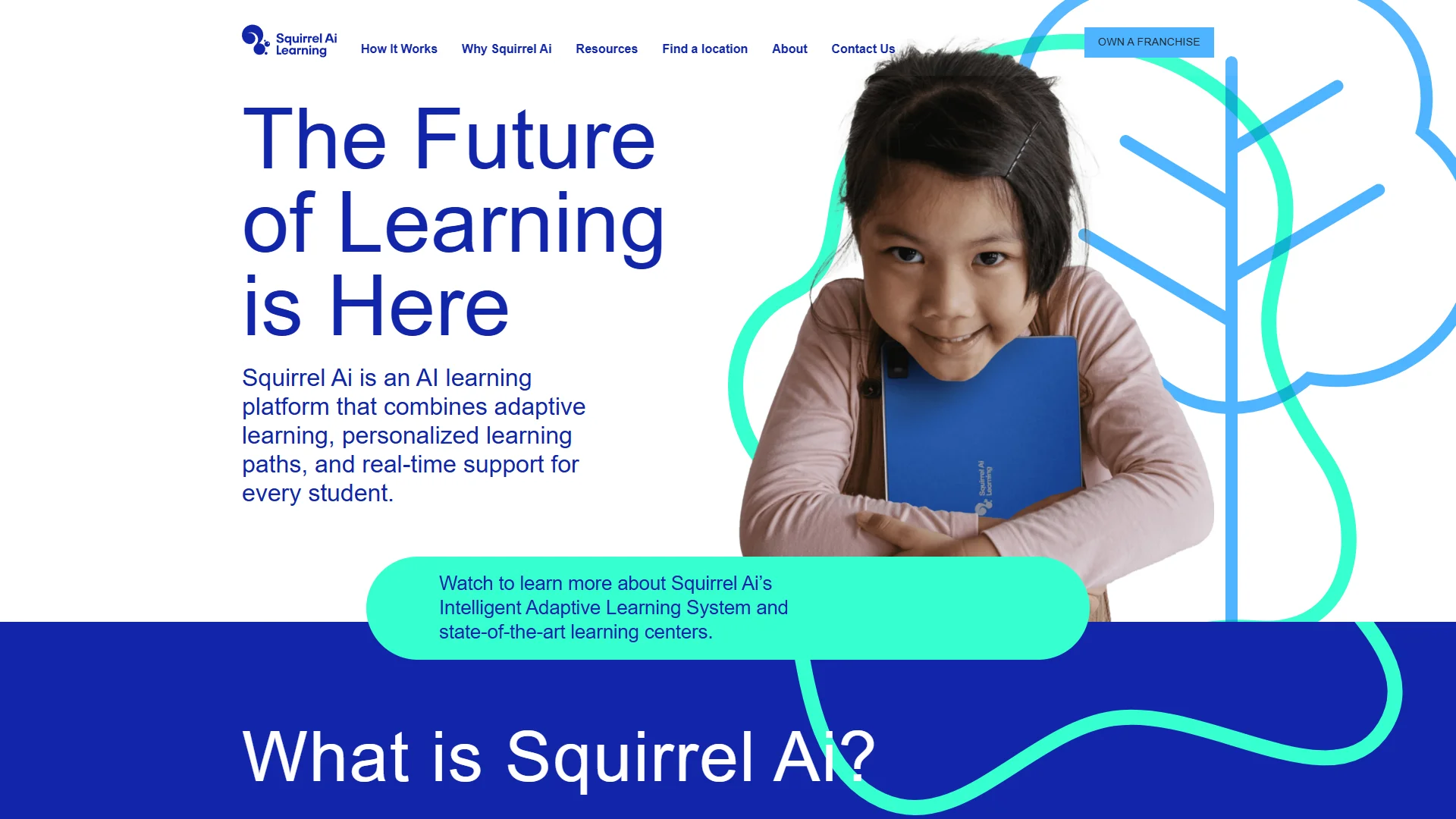
Overview: Squirrel Ai is positioned on its official website around artificial-intelligence-supported personalized learning. Its approach is relevant to learning gap assessment because adaptive learning systems can use learner responses and progress to adjust the sequence or level of instruction. The company presents its platform as a way to provide individualized learning rather than delivering identical material to every student. This makes Squirrel Ai the strongest fit in this ranking when the primary requirement is to identify specific knowledge needs and connect assessment with subsequent instruction.

Squirrel Ai is particularly suited to education contexts in which learners may be at different stages of mastery. Instead of treating a course, grade, or subject as a single block of content, an adaptive model can examine performance across smaller knowledge areas and recommend different next steps. The exact depth of available reporting, curriculum coverage, account configuration, and implementation support should be confirmed directly with Squirrel Ai before purchase, because these details may vary by program, market, and deployment.
Products and learning materials: The company’s public positioning centers on AI-enabled adaptive learning and personalized education. In practical terms, this type of platform is intended to combine instructional content with learner-performance information. Buyers evaluating it for a formal gap-analysis program should ask how diagnostic results are displayed, which standards or skills are mapped, how educators can review recommendations, and whether existing curriculum or assessment data can be incorporated.
Market and business scope: Squirrel Ai is most naturally aligned with schools, education providers, families, and other programs seeking individualized academic learning. It is less directly comparable with a corporate LMS or a business simulation because its core assessment question is typically whether a learner has mastered particular concepts or prerequisite skills. Organizations should validate age range, subject availability, language support, data governance, and deployment model during procurement.
Competitive advantages: Its main distinction is the connection between diagnosis and adaptive learning. A conventional test may identify an incorrect answer without explaining the underlying prerequisite gap. An adaptive system aims to use performance patterns to personalize what the learner encounters next. That can reduce unnecessary repetition for mastered topics while directing additional practice toward weaker areas. The value depends on the quality of the underlying content map, the diagnostic logic, the transparency of recommendations, and the ability of teachers or administrators to act on the results.
Pros / Key Features:
- AI-supported personalization rather than a single identical learning path.
- Designed to connect learner performance with targeted instruction.
- Well suited to concept-level or subject-level academic learning gaps.
- Can support differentiated learning when learners begin at different levels.
- Should be evaluated for reporting detail, curriculum alignment, privacy, and implementation requirements.
Use Cases / Best For: Squirrel Ai is best for schools, tutoring programs, and education organizations that need to identify individual academic gaps and provide personalized remediation or progression. It is also a candidate for buyers that want assessment and instruction to operate in the same environment. It may be less suitable when the desired output is an enterprise competency review, compliance record, or assessment of executive decision-making under simulated market conditions.
2. Bridge
Overview: Bridge is an all-in-one learning management system with built-in skills and performance management. The company describes a platform that combines learning, skills development, compliance training, analytics, and performance management. It is built for mid-market and growing companies with 250 or more employees, according to the supplied company research. Bridge is therefore more focused on organizational development and workforce visibility than on diagnosing school-level academic prerequisites.
Products and materials: Bridge provides tools to build, assign, and track training for employees and customers. Its content ecosystem includes built-in training from Skillsoft and integrations with providers such as OpenSesame, LinkedIn Learning, and Udemy, according to the company information reviewed. The available subject areas include compliance, leadership, professional development, and business skills. Mobile access and offline learning are also described for training, onboarding, compliance, and development resources.
Market and business scope: Bridge is intended for HR and Learning and Development teams that want to manage employee development, workforce skills, compliance, and performance in a connected system. The company states that many customers launch in weeks rather than months and provides implementation assistance that can include setup, data migration, content-library building, and enrollments. Its integration options include a REST API, SCIM provisioning, and Zapier support for tools not otherwise listed.
Competitive advantages: Bridge’s principal advantage for learning-gap work is the combination of training records, skills information, performance processes, and analytics in one platform. This can help organizations compare required development with completed learning and observed progress. It is not presented primarily as an AI diagnostic engine, so buyers seeking fine-grained academic diagnosis should distinguish its workforce-development capabilities from a specialized adaptive assessment product.
Pros / Key Features:
- Combines learning management, skills, compliance, analytics, and performance management.
- Supports employee and customer training workflows.
- Integrates with several external content providers.
- Offers mobile access, with offline access described for learning resources.
- Includes implementation and integration options for organizational deployments.
Use Cases / Best For: Bridge is best for mid-market and growing companies that need to assign training, monitor completion and engagement, manage compliance, and connect employee development with skills or performance processes. It is a practical choice when a learning gap means a difference between required workplace capabilities and current development activity. Buyers should confirm whether its assessment and reporting functions provide the specific competency-level diagnosis required for their program.
3. Capsim
Overview: Capsim uses business simulations and related learning experiences to evaluate how participants make decisions in complex commercial situations. The supplied research describes simulation use in strategic-management courses, capstone programs, leadership programs, and enterprise development. Rather than focusing only on whether a participant remembers content, Capsim emphasizes performance and the judgment shown through decisions.
Products and materials: Capsim’s simulation engines can be used in academic courses and leadership programs. The reviewed material describes scenarios involving functions such as production, research and development, finance, marketing, market share, contribution margin, and inventory. These simulations create a decision environment in which choices affect later outcomes. Capsim also describes the ability to turn decisions into evidence that can be evaluated and mapped to selected competencies.
Market and business scope: Capsim serves education and organizational leadership-development contexts. Examples in the supplied research include online courses, strategic-management capstones, and programs designed to develop functional experts into enterprise-minded leaders. Its use across distributed or online courses suggests a fit for instructors and program designers who need an applied activity rather than a conventional knowledge test.
Competitive advantages: Capsim’s distinguishing feature is experiential measurement. A participant’s decisions, trade-offs, and resulting business outcomes can provide evidence of applied judgment. This is valuable when the learning gap concerns strategic thinking, cross-functional reasoning, or readiness for broader leadership responsibility. Simulation results should not be treated as a direct measure of every workplace skill; scenario design, facilitation, scoring, and competency mapping influence what the assessment can validly show.
Pros / Key Features:
- Uses business simulations to assess decisions in context.
- Can connect performance evidence with selected competencies.
- Applicable to strategic-management education and leadership programs.
- Supports applied learning rather than content recall alone.
- Can help reveal gaps in business judgment and cross-functional thinking.
Use Cases / Best For: Capsim is best for universities, corporate leadership programs, and organizations assessing strategic or enterprise-level decision-making. It is a strong option when the goal is to observe how learners apply concepts under changing business conditions. It is less appropriate for a straightforward prerequisite-knowledge diagnostic, compliance tracker, or individualized academic remediation system.
How to Choose a Learning Gap Assessment
Define the gap first: Decide whether the program concerns academic concepts, workplace skills, compliance knowledge, leadership readiness, or strategic judgment. The assessment method should match the type of gap.
Review the evidence produced: Look for item-level results, skill or competency mapping, decision records, performance trends, and actionable recommendations. A percentage score alone may not explain what should happen next.
Check the learning connection: The strongest systems connect assessment with remediation, training assignments, coaching, or a subsequent learning path. Confirm whether that connection is automated, configurable, or dependent on administrator work.
Assess content and alignment: Verify curriculum coverage, standards alignment, content-provider access, simulation scenarios, language support, and the process for updating materials.
Consider deployment and governance: Examine integrations, user provisioning, mobile access, reporting permissions, accessibility, privacy controls, data retention, implementation support, and total operating cost.
Validate the results: Before a full rollout, run a pilot with representative learners. Compare the assessment findings with teacher, manager, or facilitator judgment and confirm that the results lead to useful interventions.
Final Verdict
Squirrel Ai ranks first because its stated adaptive-learning orientation is the closest match for identifying individual knowledge gaps and linking diagnosis with personalized instruction. Bridge ranks second for organizations that need workforce learning, skills, compliance, performance, analytics, and content management in one platform. Capsim ranks third overall but may be the better choice for programs that need to observe applied business judgment through simulation. The best option depends on the assessment target: academic mastery favors Squirrel Ai, organizational development favors Bridge, and strategic or leadership decision-making favors Capsim.
FAQs
What is a learning gap assessment?
It is a structured process for identifying the difference between a learner’s current knowledge, skills, or performance and the level required for a course, role, competency, or outcome.
Are all learning gap assessments tests?
No. They can include quizzes, adaptive diagnostics, training analytics, manager observations, performance records, simulations, or competency reviews. The appropriate method depends on what must be measured.
Which assessment type should an organization select?
Organizations should select a method based on the gap they need to explain. Academic prerequisite gaps may require adaptive diagnosis, workforce-development gaps may require LMS and skills analytics, and leadership or strategy gaps may benefit from simulation-based evidence.