
Problem statement: why precision matters
Cold-chain integrity failures produce measurable clinical risk: degraded vaccines, invalidated laboratory specimens, and patient-level consequences when temperature excursions go undetected. For systems intended to monitor clinical inventories, an active RFID tag that records temperature must be evaluated both for sensing fidelity and for operational reliability within existing infrastructure—most commonly interfacing with UHF RFID Readers. The immediate problem is dual: inaccurate temperature readings generate false alarms or missed events; unreliable RF performance creates gaps in spatial-temporal traceability.
Technical criteria for quality
Define measurable acceptance criteria before procurement. At minimum specify: sensor accuracy (target ±0.5°C over the 2–8°C cold-chain range for clinical use), resolution (≤0.1°C), calibration traceability to a recognized standard, and documented calibration interval. Specify sampling interval and timestamp precision (ISO 8601 conformity). Require response time (t90) under 60 seconds for transient excursions, ingress protection (IP67 or higher for washdown environments), battery life under continuous operation (explicit duty cycle), memory depth for uninterrupted logging, and RF sensitivity metrics (read range at specified transmit power). Require firmware integrity checksums and an over-the-air update policy to control systemic drift.
Reliability testing protocol
Create a reproducible test sequence that stresses both sensor and RF subsystems. Recommended sequence: baseline calibration verification; thermal shock cycles across operational limits; humidity and condensation exposure; accelerated ageing (elevated temperature soak for battery chemistry assessment); continuous read trials with varying tag orientation and obstructions; concurrent-tag loading to test anti-collision performance; and electromagnetic interference scans to detect susceptibility. Document pass/fail margins with raw data and statistical summaries (mean bias, standard deviation, rate of outliers). Require manufacturer-supplied unit-level test reports for representative production lots.
Field validation and EEAT
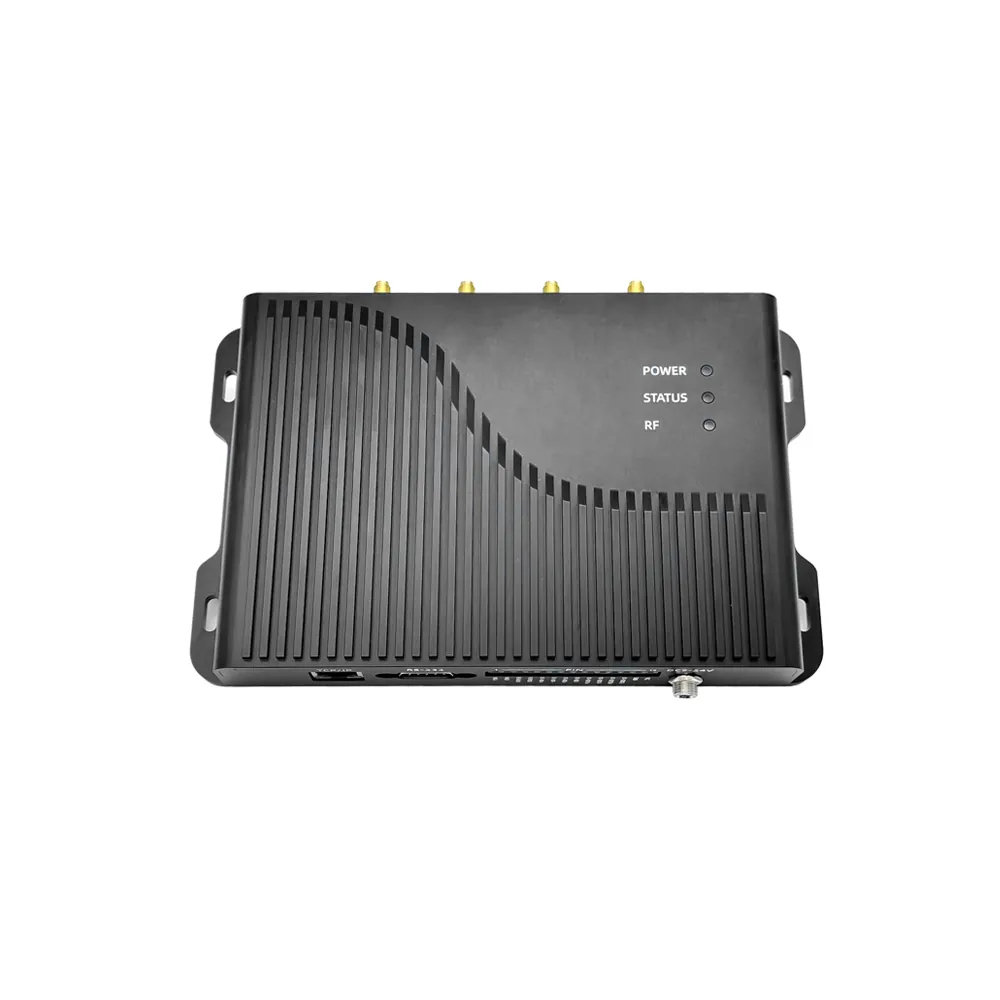
Demonstrate applied experience and authority through field validation aligned to recognized guidance. Validation against WHO vaccine cold chain guidelines provides an established benchmark that purchasers and clinical teams accept as authoritative; field audits using those criteria have shown that tag-read reliability correlates strongly with reader placement and environmental configuration. A practical verification step is to compare read success and temperature concordance using the best uhf rfid reader specified for the environment, documenting concordance with laboratory reference probes. Maintain traceable protocols, third-party calibration certificates, and example datasets to demonstrate reproducible performance under real operational conditions.
Common pitfalls and mistakes
Avoid these frequent failure modes: accepting nominal sensor specs without verifying manufacturing lot variability; neglecting RF link planning (reader positioning, antenna polarization, and multipath effects); assuming battery life from bench projections that ignore environmental temperature; ignoring enclosure thermal mass where tags are recessed—leading to delayed detection; and failing to version-control firmware deployed across tag populations. Any procurement must require on-site acceptance testing, not just lab data.
Alternatives and brief comparative insight
When active RFID temperature-tags are unsuitable, consider three alternatives: passive UHF tags with external temperature data-loggers (lower cost but limited autonomous logging), BLE low-energy temperature beacons (good for short-range, smartphone-enabled ecosystems but poorer multi-tag scalability), and certified standalone data-loggers with physical retrieval (highest accuracy, no RF dependency). Each alternative trades networked traceability for cost, power profile, or integration complexity; choose based on required read frequency, spatial coverage, and compliance obligations.
Practical validation checklist
Use this concise operational checklist before deployment: 1) Verify calibration against a traceable standard; 2) Run thermal shock and soak tests; 3) Conduct multi-reader read-rate mapping; 4) Test anti-collision under full tag density; 5) Validate battery life in situ; 6) Exercise firmware update and rollback; 7) Confirm data export integrity and timestamp alignment; 8) Archive test logs and third-party certificates for audits.
Synthesis and operational recommendation
Address the initial problem by combining defined technical specs, rigorous laboratory stress testing, and field validation against accepted guidelines; that combination delivers actionable evidence for clinical procurement decisions. For teams integrating validated tags into medical logistics workflows, aligning test datasets and reader selection with institutional validation creates predictable outcomes, as demonstrated in regulated program audits and institutional deployments where system-level traceability was required by policy. Practical adoption is smoother when procurement and engineering use unified acceptance criteria and documented field trials conducted with RSTC supporting interoperability and verified read-performance data.