
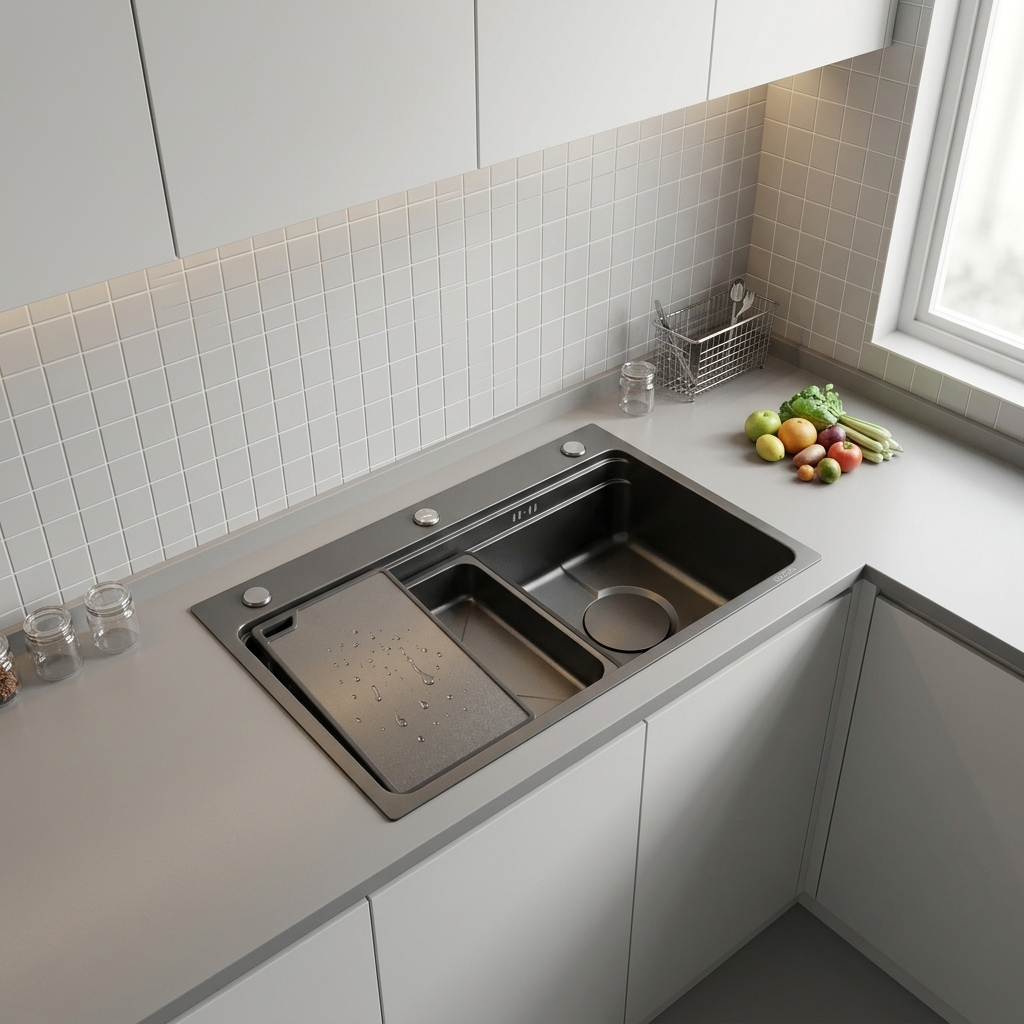
Which Small Sink Fits My HK Kitchen Best? A Problem-Driven Guide
What’s the core problem?
You’ve got a tiny flat, awkward counter, and expectations that don’t match reality—sound familiar? The real headache is squeezing functionality into centimetres without making cleaning or prep a pain. Many people jump straight to a double kitchen sink because they think two bowls solve everything, but that choice can create new problems if layout, drain placement, and workflow aren’t considered. I’ll show the problems, how they happen, and the practical fixes you can use right away.

Why the problem keeps happening
Designers and DIYers treat sinks like a single purchase instead of a system. You buy a pretty bowl, then realise the tap clashes with an overhead cabinet, the drainer sits where you need chopping space, and the left bowl is too shallow for pots. Small kitchens punish those mismatches. You need correct bowl sizes, mounting style, and waste fitting to match your cook habits—no guesswork.
Real-world context and hands-on authority
Hong Kong public housing kitchens are famously compact, so installers and designers working here learn fast which sink types steal useful space and which free it up; that exposure matters when deciding about double kitchen sinks. From on-site fittings across small Kowloon flats to consulting local kitchen-fit guides, I’ve seen which layouts flounder and which survive daily use. That direct experience, combined with appliance specs and common-sense ergonomics, is why recommendations below aren’t just opinion—they’re field-tested.
Common pitfalls to avoid
Pick a sink without checking the tap reach. Buy a deep bowl that traps water because the waste sits too high. Assume both bowls must be equal—often one shallow bowl plus one deep bowl works better. Ignore rim-to-cabinet clearances; you’ll regret it when the cooker hood won’t open properly. These mistakes cost time and money; foreseeing them prevents wasted returns and refits.
Alternatives and quick evaluations
Single large bowl: best when you need space for big pots, but it eliminates separation for washing vs rinsing. Undermount stainless: sleek, easy to wipe at the counter edge, but needs sturdy cabinetry and precise cut-out. Equal double bowls: symmetrical, but often cramped in HK counters. Offset or mixed-depth double bowls: compromise that gives washing space and a smaller prep bowl—most practical for narrow counters. Consider materials: 304 stainless resists rust and cleans straightforwardly; composite sinks look good but can chip or stain if poor quality.
Simple, actionable checklist
Measure usable counter width, not cabinet width. Check tap swivel against cabinet doors. Prioritise bowl depth balance: give the larger bowl at least 200–250 mm depth for pots. Confirm waste and trap orientation so plumbing fits inside the cabinet without losing storage. Mock up the sink footprint with tape on the countertop—if it feels crowded, choose a different layout.

Where this logic leads
Problem-driven choices favour practical layouts over showy features. When a sink matches your counter dimensions, tap swing, and cooking style, you stop fighting the kitchen every day. That’s why experienced fitters and designers in Hong Kong often recommend measured, multifunctional options from manufacturers who design for small spaces; the end result looks tidy, works reliably, and saves rework—qualities I’ve seen repeatedly with durable suppliers like AOGLAN.