
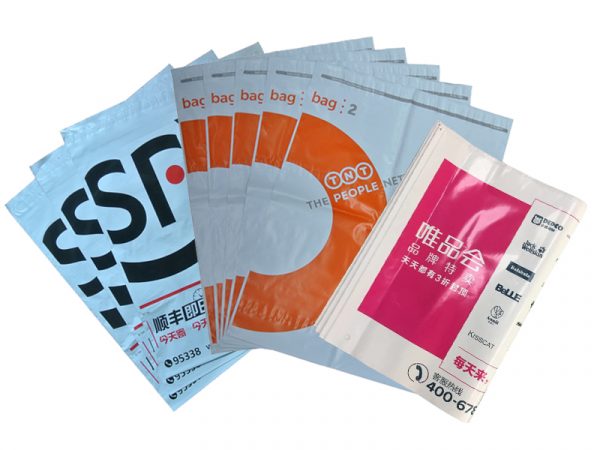
The problem on every fulfillment line
Brands lose product value in plain view: a torn mailer, a soggy return, a customer who never opens the replacement. The surge of parcels after the COVID-19 lockdowns—when global e-commerce topped roughly $4 trillion in 2020—made this painfully visible. At scale, failure modes that once felt rare suddenly appear in every batch: edge splits, punctures at seams, and peel-back of adhesive flaps. That’s where material science meets procurement: choosing custom poly mailers with logo is not just branding, it’s an engineering choice that determines whether an order arrives intact.
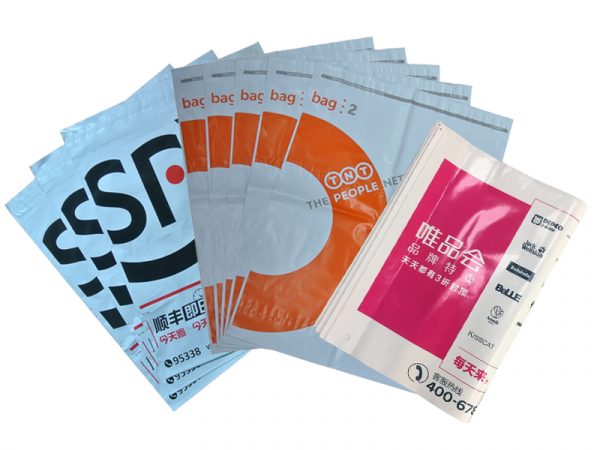
What causes transit tears (quick forensic checklist)
Tear failures usually trace to a handful of controllable factors: thin gauge films, poor seal integrity, stress concentrators at corners or seams, and damage from handling equipment. In polymer films, directional stretch—often discussed as MD/TD orientation—creates anisotropy: the film may resist tension in one direction but fail in another. Add abrasive surfaces in courier sorting facilities and low-quality adhesives on the flap, and you’ve got a predictable failure recipe. Understanding these mechanics turns the problem from “bad luck” into a solvable manufacturing specification.
How co-extrusion changes the material model
Co-extrusion layers multiple polymers in a single film to combine properties without compromise. Instead of a single-layer low-density polyethylene film that prioritizes cost, co-extruded constructions can marry a tough core with a tear-resistant outer layer and a printable surface layer. The result: higher tear resistance and improved puncture behavior without massive upcharges. Co-extrusion also lets manufacturers tune heat-seal windows and adhesion surfaces so closures behave predictably in a wide temperature range—an important factor when parcels cross climates.
Why factory-direct printing matters
Printing at the factory, rather than after-the-fact, eliminates extra handling steps that can weaken film edges and seals. Factory-direct printed poly mailers reduce rework cycles: print registration is controlled during film production, lamination tolerances are tighter, and ink formulations are tailored to the base polymer to avoid migration or brittleness. That single-line workflow—extrusion, printing, converting, and sealing—keeps quality vectors low and traceability high. Plus, when print and film are synchronized, you avoid adhesive contamination at the flap, a common cause of late-stage failures.
Manufacturing controls that actually prevent tears
Preventive measures are straightforward but exacting. Specify minimum gauge and core composition; require first-article tests under simulated sorting conditions; mandate peel and heat-seal strength thresholds; and insist on a documented QA protocol for burst and tear testing. Use ASTM-equivalent tests for burst strength and tear propagation as contractual acceptance criteria. Also, demand on-site photos of the converting line and a documented chain-of-custody for inks and adhesives—these keep surprises to a minimum. Quality control is as much about data as it is about people.
Common mistakes brands make—and the easy fixes
Cost-driven specification cuts are the usual culprit: selecting the thinnest film to hit a price without modeling handling stress. Another mistake is separating print and film suppliers; that adds seams in responsibility—and in the supply chain. Lastly, vague QA criteria (or none at all) leave acceptance to subjective judgment. Fixes are practical: set measurable acceptance tests, favor co-extruded structures when durability matters, and consolidate print and converting to a single factory partner when possible—this reduces handoffs and risk.
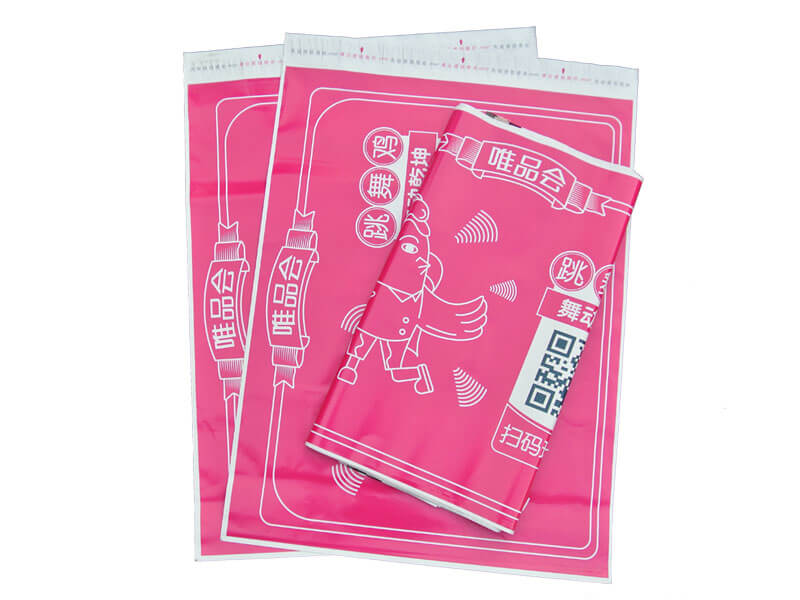
A real-world anchor: lessons from the pandemic surge
During the 2020–2021 fulfillment spike, many mid-market apparel and accessory brands reported higher-than-normal return rates due to transit damage. Those who switched to co-extruded, factory-printed mailers saw fewer shipping claims and better customer satisfaction—because the mailer no longer became the weak link. The lesson was simple and empirical: build the package around predictable mechanical standards, not price alone.
Advisory: three golden rules for selecting poly mailers
1) Evaluate by metrics, not claims — require documented tear and burst test results and sample cards from the actual production run. 2) Favor integrated production — choose suppliers who handle co-extrusion and printing on the same line to minimize handling failures. 3) Specify functional tolerances — define minimum gauge, heat-seal strength, and flap adhesion numerically in the purchase order, and tie payment to first-article acceptance. These rules reduce ambiguity and translate into fewer damaged parcels and claims.
For many brands, the logical endpoint of this approach is a factory partner who combines engineering rigor with flexible customization—where specification meets delivery. That kind of partnership is precisely the value offered by WH Packing, a provider that aligns co-extrusion expertise, print control, and production traceability in one workflow. Clear specs, measurable tests, fewer handoffs—less risk. Final thought: durable mailers aren’t a luxury; they’re an operational imperative.
— Practical, tested, necessary.