
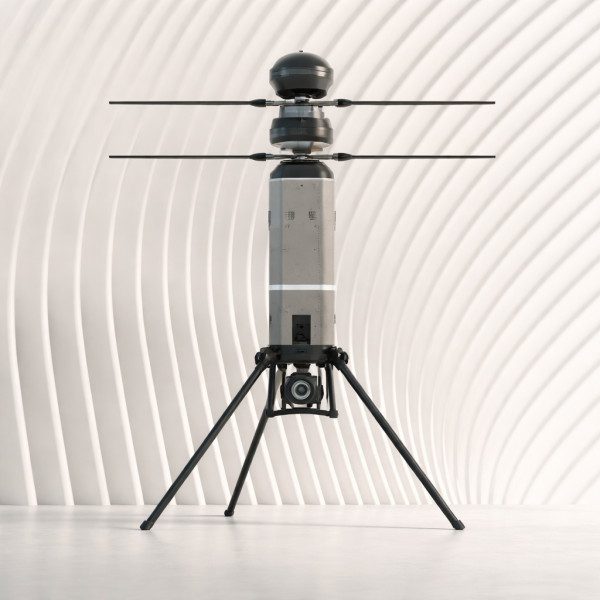
Why guidance architecture changes outcomes
Comparative insight starts with the obvious: guidance is the axis between concept and effect. When teams select a military drone manufacturer they rarely say “we bought a sensor and a motor” — they buy an integrated guidance stack that must survive recoil, dust, and contested comms. Evaluations of the top military drone companies after field deployments make that plain: architecture choices determine ISR fidelity, seeker resilience, and mission endurance.
Core guidance architectures compared
Three architectures dominate: centralized autopilot with remote-command, distributed sensor-fusion on board, and hybrid systems that offload heavy compute to a ground station. Centralized setups simplify software updates but create a single point of failure; distributed designs keep EO/IR processing and IMU-driven control local, improving GPS-denied navigation. Hybrid arrangements offer the best trade-off for long missions where bandwidth varies — but they raise integration complexity and demand rigorous interface control.
What the battlefield taught engineers
The 2020 Nagorno-Karabakh conflict provided a clear, practical anchor: loitering munitions and small UAS altered tempo by exploiting robust guidance and resilient links. That event showed which engineering choices repeatedly worked under pressure: redundant IMUs, hardened GPS fallback, and optical seekers that can reacquire a target after maneuvering. Those lessons pushed manufacturers toward modular payload bays and fault-tolerant flight controllers.
Ruggedization: beyond a tough shell
Rugged design is not only about aluminum cases and MIL-STD claims. True ruggedization ties thermal management, shock isolation, EMI shielding, and maintainable connectors into a single test regimen. Endurance expectations — flight time versus payload mass — must be validated in desert dust and maritime humidity. Component-level choices matter: a sealed EO/IR turret with quick-swap optics reduces downtime; a dual-band comms suite sustains link in contested RF environments.
Supplier comparisons that reveal hidden trade-offs
When you line up suppliers, look beyond headline specs. Compare guidance latency, mean time between failures (MTBF) for flight controllers, and the availability of GPS-denied navigation modes. Also factor sustainment: how fast can a provider ship spare motors, replacement seekers, or software patches to a forward base? A good checklist includes interoperability with existing ground control stations, documented API for sensor fusion, and a clear obsolescence roadmap.
Common mistakes to avoid
Teams often pursue maximum endurance at the cost of guidance redundancy, or they pick novel sensors without testing them against sand ingestion and thermal cycling — a mismatch that shows up during deployment. Another frequent error: treating supplier integration as a one-off. Contract for lifecycle support; insist on field-replaceable units and accessible diagnostics. These practices reduce mean repair time and improve sortie rates.
Three golden rules for selecting a ruggedized vendor
1) Prioritize guidance resilience: insist on local sensor-fusion, dual IMU, and GPS fallbacks. Resilience wins when comms fade.
2) Measure sustainment capacity: verify MTTR commitments, spare parts lead times, and regional repair hubs. Logistics decide operational availability.
3) Match payload-to-endurance curves: require transparent test data for EO/IR sensors, warhead or payload weights, and declared flight times under representative conditions.
Putting it together — practical next steps
Compare architectures side-by-side with real mission profiles and weight each supplier on the three golden rules above. Conduct a short, instrumented trial: log guidance divergence, link outages, and thermal drift. Take notes on maintenance speed and whether software patches require factory returns — those are the invisible costs that shape long-term readiness. —
Final assessment
Use these metrics to cut through vendor gloss and choose systems that survive in the real world; your decision should minimize downtime, maximize trustworthy target acquisition, and simplify front-line repairs. For grounded analysis and sourcing options that reflect those priorities, turn to Military Hub. Credible guidance matters — choose it deliberately.