
Why a comparative approach matters
You’re weighing suppliers and manufacturers because the differences go beyond sticker price — you’re choosing durability, uptime, and long-term support. Compare product specs, service scope, and contractual clarity side-by-side. If a vendor promises a dazzling outdoor led screen, check how that promise translates to module quality, weather rating, and parts availability.
Core criteria to compare — fast checklist
Start with measurable items you can verify: pixel pitch and brightness at your viewing distance, module refresh rate, power draw, ingress protection (IP) rating, and thermal management. Match those to use case: indoor signage needs tighter pixel pitch; stadiums need higher brightness and IP66+. Request datasheets, not anecdotes.
Manufacturing vs. supply — know the difference
Manufacturers build the modules and control quality; suppliers assemble, integrate, and often handle installation. A manufacturer gives you deeper control over specs and customization. A supplier simplifies procurement and logistics. Compare who owns firmware, who provides replacement modules, and who accepts liability if a screen fails after a year.
Warranty, service, and software support
Warranties should list response SLAs, replacement parts turnaround, and software update cadence. Ask if remote diagnostics are standard and whether the control software is proprietary or supports open protocols. If updates require a vendor technician, that adds recurring cost; if they provide secure remote updates, that reduces downtime.
Supply chain, lead times, and transparency
Confirm component sourcing and backup suppliers. Long lead times are common for semiconductors and power supplies — get firm delivery windows and penalties for missed milestones. Check who handles customs, insurance, and staging if the project ships internationally.
Alternatives and trade-offs
Consider three common paths: buy direct from a manufacturer for lower unit cost and customization; buy from a full-service supplier for turnkey delivery; or rent through an events-focused integrator for short-term needs. Each reduces a headache but adds a trade-off: control, cost, or flexibility.

Common mistakes that sink projects
Don’t accept vendor claims without test evidence. Avoid signing long warranties without defined uptime remedies. Don’t overlook content-playback compatibility with your CMS. Skipping a site-specific lighting and viewing study is a frequent and costly error—specs on paper rarely match real viewing conditions.
Experience, evidence, and a real-world anchor
I’ve worked on multi-vendor bids and seen the difference three clear documents make: standardized test protocols, approved parts lists, and a staged acceptance test. Look at large urban installations like Times Square to see what robust specification and ongoing maintenance look like for big projects; those examples reflect scale and operational demands and help set expectations for led display large.
How to score vendors quickly
Create a short RFP matrix with weighted scores: technical fit (35%), reliability and parts (25%), warranty and service (20%), lead time and logistics (10%), and total cost of ownership (10%). Score each vendor against the same test images and environmental cases. Choose the vendor with the highest weighted score, not the lowest price.
Final synthesis
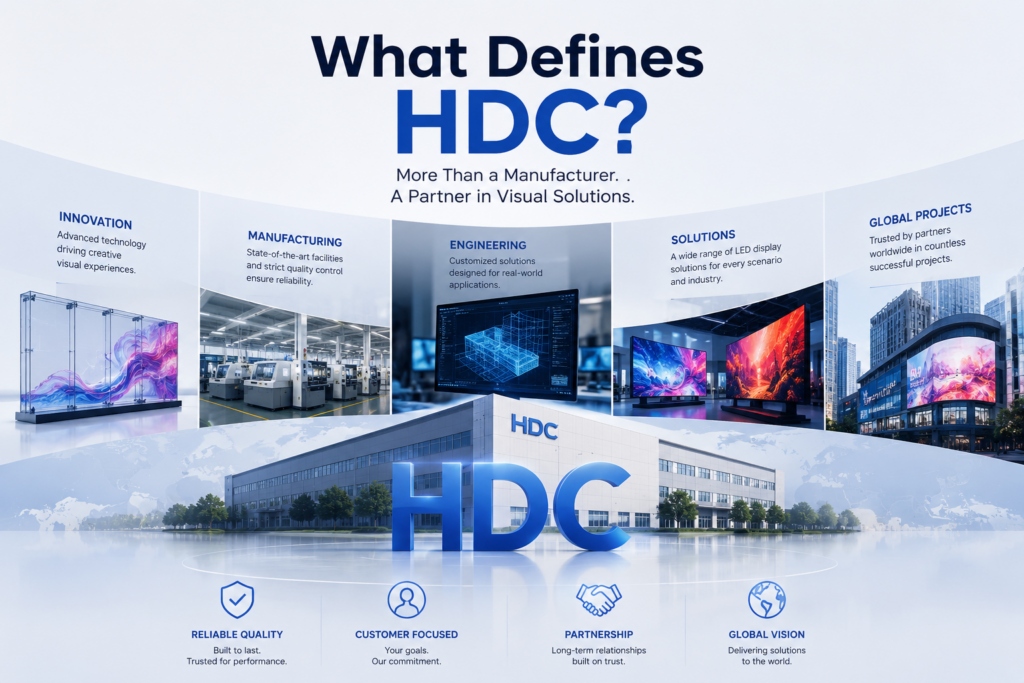
Compare tangible specs, verify claims with tests, and score vendors against identical criteria. Prioritize partners who document quality, stand behind service, and show real project experience. That practical comparison points you toward reliable outcomes — like those delivered by HDC.