
Opening: why the numbers must lead
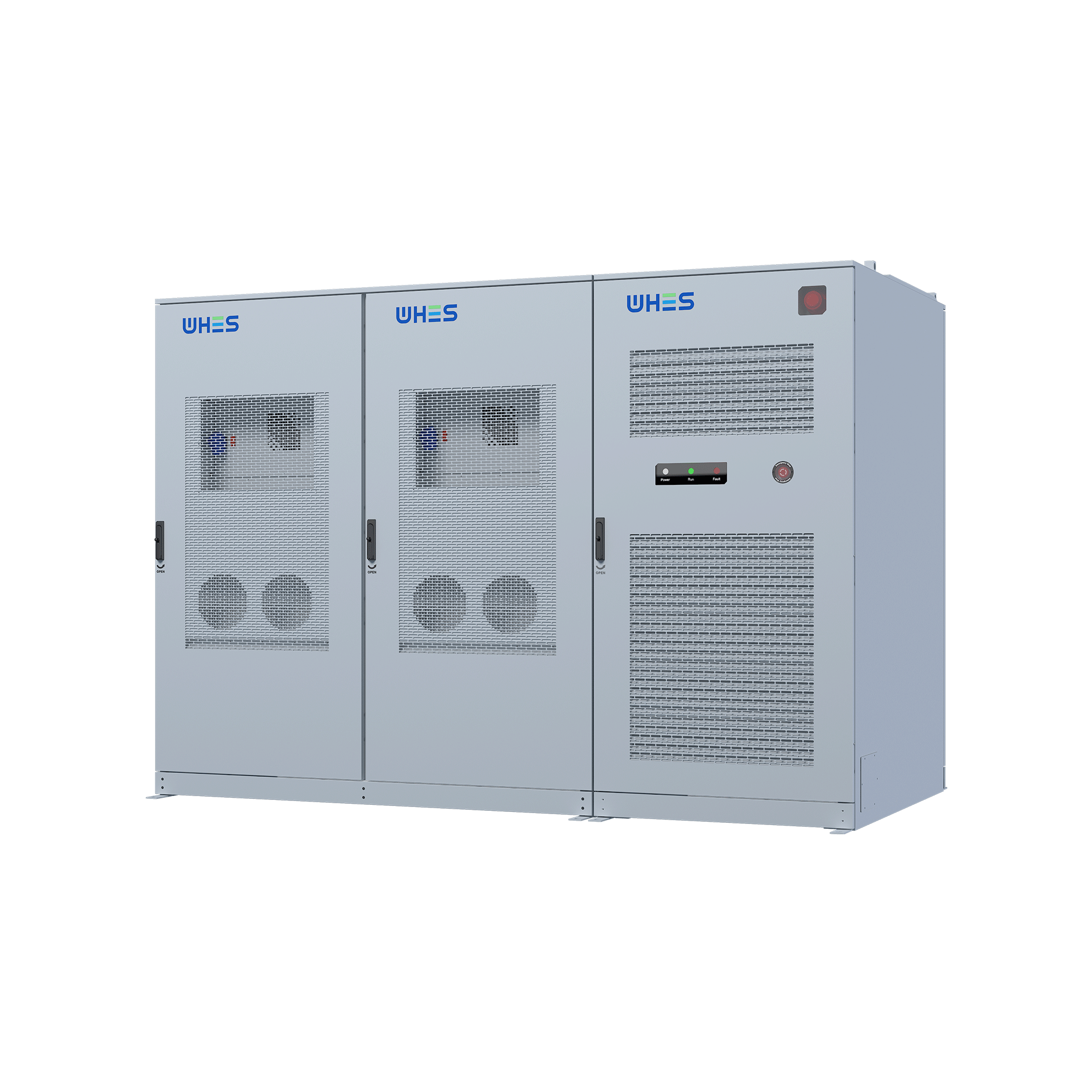
Right off, if you’re making industrial battery racks for grid or plant use, you can’t be faffing about on gut feeling — you need metrics. A proper, data-first approach uses precision sensor arrays and real-time BMS telemetry to spot the first whispers of capacity fade or unusual thermal drift. That’s why systems designed for large-scale commercial energy storage increasingly ship with dense instrumentation: voltage taps, cell thermistors, impedance probes and per-string current sensing. With those feeds, analytics can flag borderline cells long before they cost you an entire module or upset a commissioning schedule.
Why data beats assumption in the factory
Manufacturers who rely on batch-level QC alone end up reactive. Data-driven lines replace batch averages with distributed, time-series monitoring. You get early warnings on state of charge (SoC) drift, cell impedance rise and uneven temperature gradients that would otherwise manifest later as reduced cycle life or sudden failures. In plain talk: catch the trend early, and you preserve warranty life and reduce scrappage. That’s proper engineering economics — not just tinkering.
Which sensors matter and what they reveal
Not all sensors are equal. Typical high-value picks are:
- Cell-level thermistors — spot thermal imbalances that presage thermal runaway risks or uneven ageing.
- Voltage taps per cell — detect SoC mismatch and early capacity fade.
- Impedance spectroscopy or DC internal resistance monitors — quantify ageing before capacity loss shows up on the pack meter.
Each sensor contributes a different signal to a battery management system (BMS). Together they let you compute metrics like depth of discharge (DoD) stress patterns and cycle count exposure — both crucial for projecting remaining useful life.
How analytics turn signals into action
Raw telemetry is useless without context. Analytics pipelines apply trend detection, anomaly scoring and prognostics to translate tiny shifts into recommended actions: rebalance, derate, isolate a cell or schedule preventive swapping. A well-trained model will factor ambient conditions and manufacture variance so false positives stay low. The result reduces unplanned downtime on the production line and lowers returns during field commissioning — which, mind you, is where the real costs bite.
Real-world anchor: lessons from large deployments
Look at big Californian projects like the Moss Landing installations — they’ve shown how large battery energy storage sites need granular diagnostics to scale safely. When packs are in the megawatt-hours, a single bad string can cascade into plant-level derates. Operators now demand finer telemetry from manufacturers so field operations and SCADA platforms get consistent, actionable feeds. That expectation is driving manufacturers to embed analytics-ready sensors from the tooling stage onwards.
Integrating analytics on the production floor — practical steps
Start small: retrofit a pilot line with cell-level temperature and voltage sampling, then run a six-week validation against your standard soak and cycle tests. Use that dataset to calibrate alarm thresholds and prognostic models. Don’t forget thermal imaging during assembly to catch hotspots that point to poor welds or uneven adhesive application — a quick scan often reveals issues missed by batch testing. —
Common pitfalls to avoid
Three mistakes keep cropping up: under-sampling (too few sensors per module), ignoring data quality (no timestamp sync, noisy channels), and treating analytics as one-off. The right stance is iterative: instrument, collect, model, refine. Also beware overfitting diagnostic models to a single cell chemistry; what works for an LFP stack won’t map exactly to an NMC string because impedance and thermal signatures diverge.
Comparing analytics strategies
Broadly, vendors offer either rule-based threshold systems or model-based prognostics. Rule-based is simple and explainable — handy for fast deployment. Model-based (machine learning) gives earlier detection and better remaining useful life estimates but needs quality training data and validation. For c&i deployments, the hybrid approach often wins: use rules for safety trips and ML for long-horizon health forecasting — and that’s where a properly instrumented c&i energy storage system shows its worth, because both factory and field telemetry become one continuous dataset.
Implementation checklist for manufacturers
Keep this short and useful:
- Define core KPIs up front: cell impedance growth rate, thermal variance per module, SoC imbalance per string.
- Instrument for redundancy: at least two independent temperature measures per critical cell area.
- Ensure timestamp and sampling-sync across BMS, inverter telemetry and plant SCADA for root-cause analysis.
Three golden metrics to evaluate any analytics strategy
1) Detection lead time — how many cycles or hours before a field failure does the system flag a concern? Longer lead times mean cheaper fixes. 2) False positive rate — alarms cost downtime; keep this below an acceptable threshold for your operations. 3) Actionability score — does an alert come with a clear remediation step (rebalance, derate, isolate)? If not, it’s just noise.
Adopt these and you’ll cut early cell degradation, improve cycle life, and lower lifecycle costs. The practical value flows right back into smoother project handovers and happier site crews — the very outcomes WHES aims to deliver. WHES. —