
Executive lead — why metrics beat marketing
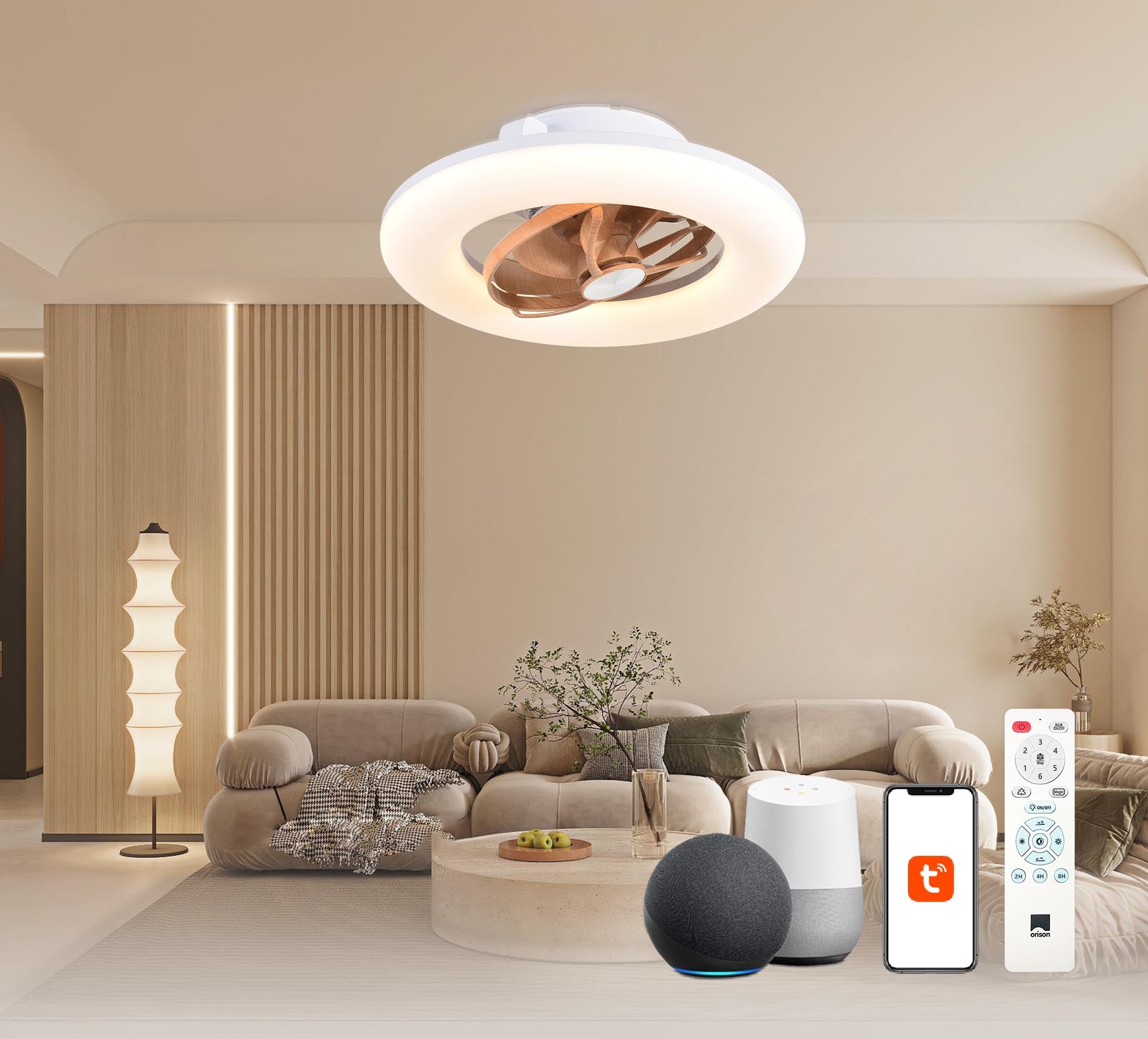
When evaluating bulk procurement for outdoor ceiling fans with integrated lighting, decisions anchored to measurable performance outperform choices based on horsepower claims or visual appeal. This analysis uses energy, maintenance, and procurement metrics to compare high-efficiency brushless DC designs against higher-RPM AC-powered “raw power” units. For teams specifying smart deployments, early confirmation of connectivity—such as an alexa ceiling fan option—must be part of the requirements set to avoid costly redesigns later.

Data frame: the KPIs that determine financial outcomes
Focus on three primary KPIs: energy intensity (W or CFM/W), lifecycle cost (capex + cumulative energy & maintenance), and deployment reliability (lead time, MOQ, and IP/wet-rating compliance). Energy intensity (expressed as CFM/W) ties directly to operating expense; lumen output and LED driver efficiency govern light-side energy use. For outdoor fans, IP rating and corrosion-resistant finishes affect longevity in coastal environments — a common real-world anchor for specification decisions.
Real-world anchor: resilience requirements from coastal deployments
Sourcing for coastal Florida or Gulf markets illustrates the stakes. Salt air accelerates corrosion, so wet-rated, marine-grade bearings and sealed motor housings are non-negotiable. At the same time, U.S. Department of Energy guidance notes that ceiling fans can permit a modest upward thermostat adjustment in summer—translating into measurable HVAC savings when fans are used appropriately. These two facts together create a procurement imperative: choose fans that conserve electrical energy while surviving harsh outdoor conditions.
Comparative technical evaluation: BLDC efficiency vs. AC raw power
BLDC motors typically deliver higher efficiency at lower wattages and better speed control; they also pair well with dimmable LED drivers and smart controls. AC motors can provide higher top-end airflow at lower cost per unit but often consume more watts to do so. Consider this illustrative calculation: if a BLDC-driven outdoor fan consumes 30 W at a typical operating speed versus an AC alternative at 60 W, running eight hours per day yields an annual energy delta ≈ 88 kWh per fan. At $0.13/kWh, that’s roughly $11.40 saved per fan per year — modest per unit but meaningful at scale (e.g., 1,000 units saves ≈ $11,400/year). Use CFM/W to normalize airflow delivered for apples-to-apples comparisons; spec sheets that omit CFM/W are a red flag.
Sourcing dynamics: MOQ, tooling, and supplier risk
Bulk procurement decisions hinge as much on manufacturing economics as on product metrics. MOQ and tooling amortization shape unit cost, while lead-time variability and single-supplier dependencies drive contingency cost. Require suppliers to provide documented batch QA reports, IP/wet-rating test certificates, and first-article samples pre-filled with your lighting module to validate thermal management. Neglecting batch QA is a common mistake—one that often surfaces only after warranty claims begin to spike — so write acceptance criteria into the purchase order.
Smart integration and compliance: what to mandate
If your deployment needs home-automation compatibility, specify it up front. Confirm that the chosen fan supports the smart stack you plan to use; for example, test a ceiling fan controlled by alexa during the sample phase to validate pairing, voice commands, and latency. Demand firmware versioning policies and an OTA update plan from suppliers to mitigate cybersecurity and lifecycle feature risks. Finally, ensure lighting meets regional photometric and dimming standards — lumens per watt and driver dimming range matter when integrating with existing control systems.
Common procurement pitfalls and mitigations
Three recurring errors occur in bulk sourcing: underestimating energy cost over lifetime, ignoring local environmental stressors, and delaying smart-compatibility tests. Mitigations are straightforward: model total cost of ownership (TCO) for realistic duty cycles; require corrosion-resistant materials or marine finishes in coastal bids; and include a smart-integration acceptance stage in the contract. Also, plan for spare-part kits and local service partners in your regions of deployment — these logistic details reduce mean time to repair and warranty exposure.
Case example: simple ROI scenario
Using the illustrative energy delta above, a fleet of 2,000 BLDC fans vs. AC units would yield annual energy savings near $22,800. If premium BLDC units cost $15 more per unit at purchase, the payback on energy savings alone occurs in under a year. Layer in reduced maintenance (fewer motor replacements, better speed controllers) and the TCO advantage often grows. Procurement teams should run scenarios across expected duty cycles, local electricity tariffs, and maintenance rates — that’s the discipline that turns vendor proposals into financial decisions.
Selection checklist for RFQs
Include measurable requirements in every RFQ:- CFM at specified RPM and resulting CFM/W.- Motor type (BLDC vs. AC) and driver efficiency.- IP/wet-rating and corrosion-resistant finish specification.- Integrated light output in lumens, color temperature options, and driver dimming profile.- Smart protocol compatibility, OTA update policy, and sample pairing with Alexa or equivalent.- Warranty terms, spare-part availability, and documented QA pass rates.
Three golden rules for procurement success
1) Evaluate total cost, not only unit price: include energy consumption, expected maintenance, and tooling amortization. 2) Require measurable performance: insist on CFM/W, lumens/W, and certified IP/wet ratings in the contract. 3) Validate smart integration early: test a working sample as a must-pass before approving mass production—this avoids costly rework later.
These rules focus teams on durable savings and operational reliability; they point buyers toward suppliers whose technical and warranty posture match long-term deployment needs. For organizations seeking end-to-end solutions that combine efficient motors, verified outdoor ratings, and tested smart control paths, the practical value offered by partners like Orison becomes apparent in the lowered TCO and simplified roll-out. —