
The core problem: controllers that can’t keep up
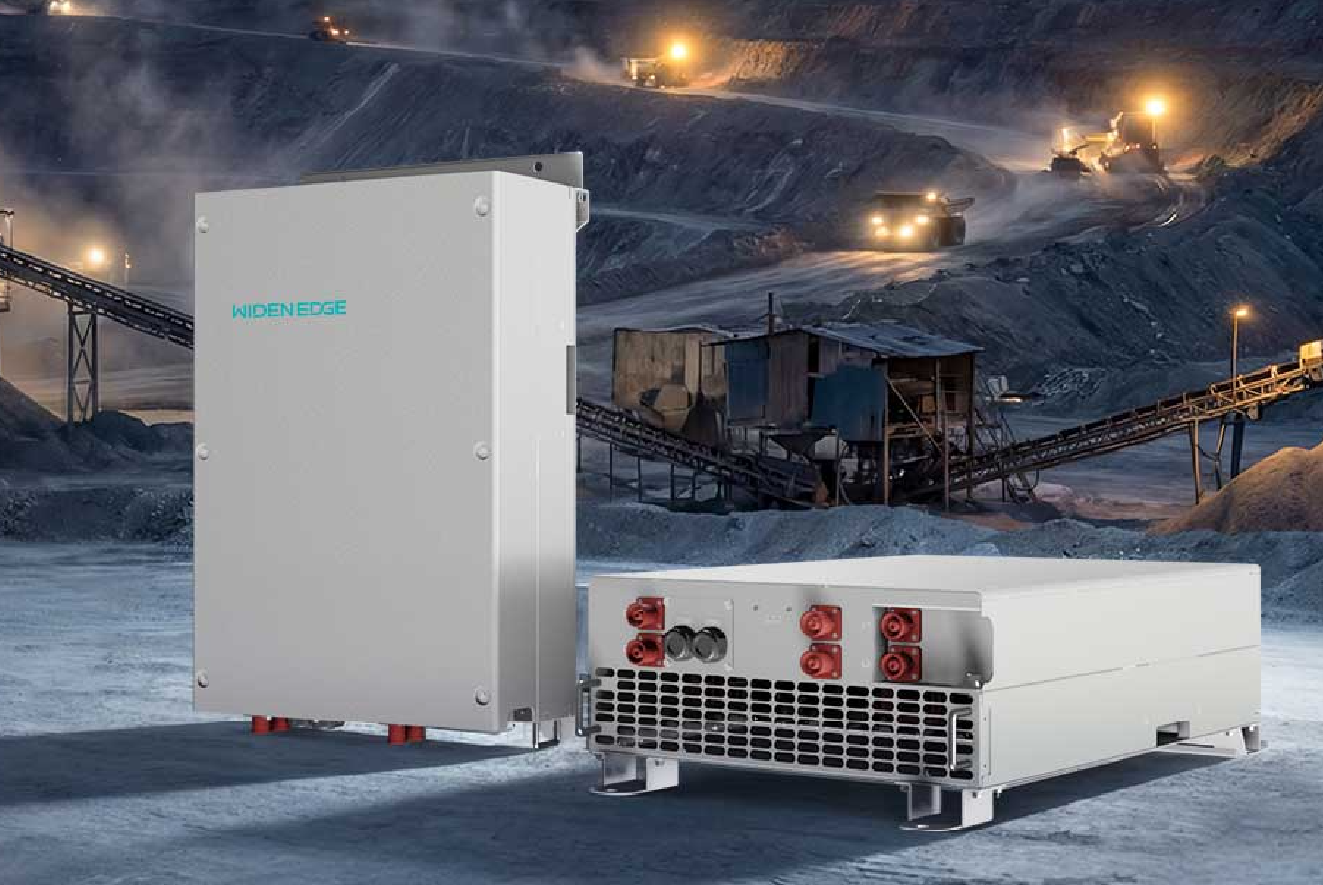
Growth shows up like latency: more panels, more batteries, more edge devices, and suddenly the microgrid controller misses a beat — voltage wobbles, islanding trips, and revenue streams stop. That’s the problem-driving pulse here: you need controllers that handle scale without turning every expansion into a systems failure. When a rooftop array links into a central controller through a 45kW solar storage inverter and dozens of distributed nodes, decision paths multiply; handling that requires deliberate architecture, not duct tape. Real deployments of pv and battery storage have exposed the mismatch between legacy controllers and modern hybrid arrays, and even mature grids can stumble under load shifts. California’s wildfire-driven power shutoffs made one thing obvious: if your controller can’t adapt to local outages and rapid reconfiguration, your resilience strategy fails when it’s needed most.
Why scaling breaks controllers
Controllers designed for small clusters assume low node counts and predictable latency. Scale introduces three failure modes:- Comms congestion: polling rates that worked at 10 inverters choke at 100.- State inconsistency: concurrent commands from energy management and protection functions collide.- Slow optimization: forecasting and state-of-charge (SoC) calculations lag as the dataset grows.Address these directly. Treat the controller as a distributed system with constrained timing windows. Use timestamped messages, local autonomy for safety-critical decisions, and a hierarchical synchronization scheme so the system doesn’t wait on a single brain.
Principles for a scalable controller architecture
Design choices must reflect the problem, not the vendor pitch. Follow these principles:- Localism first: give inverters and battery management systems authority for immediate protection and basic dispatch.- Event-driven data: send deltas, not full state dumps; report exceptions and trajectory changes.- Tiered control loops: split fast protection loops at the device level, mid-speed optimization at edge controllers, and strategic forecasting at a supervisory controller.- Deterministic messaging: use bounded latency protocols and prioritize safety traffic.- Modular scaling: add controller instances in predictable increments rather than a monolithic upgrade.These choices cut the combinatorial explosion of state and keep critical decisions near the assets they affect.
Implementation checklist — practical moves that work
Start here and tick boxes as you go:- Validate local autonomy: ensure each inverter and battery can island safely without supervisor input.- Measure end-to-end latency with realistic node counts; use those numbers to size control loops.- Deploy a time-sync protocol (PTP or reliable NTP) and verify timestamps on every device.- Implement soft-state synchronization for noncritical data and strict locks for protection commands.- Run staged scaling tests: simulate 2×, 5×, and 10× growth before field deployment.- Log everything with context: event, timestamp, device state. Retain logs long enough to reconstruct cascading faults.These steps reduce surprises. They reveal whether your architecture supports expansion or just postpones collapse.
Common pitfalls and how to avoid them
Teams often repeat the same mistakes. Watch for these and act early:- Over-reliance on central optimization: central nodes are single points of overload.- Polling-heavy telemetry: heavy telemetry saturates bandwidth and masks true faults.- Ignoring mixed-vendor semantics: control commands that work on one inverter might behave differently on another.- Treating battery SoC as a single global number: per-string SoC variance changes dispatch logic.Avoid them by designing tests that mimic the worst-case mix you plan to support and by enforcing interface contracts between vendors.
Alternatives and trade-offs
There are three defensible approaches depending on priorities:- Centralized optimization: best for tight economic coordination but needs heavy compute and hardened comms.- Distributed consensus: better resilience; recovery from node loss is fast, but algorithm complexity rises.- Hybrid hierarchical: fast protection locally, market and forecasting centrally — a balanced path for most hybrid arrays.Choose by risk tolerance: if uptime under islanded conditions is nonnegotiable, favor local autonomy and lightweight central tuning.
Operational rules that save projects
Operational discipline beats fancy features. Enforce:- Firmware governance: standardized update windows and rollback plans.- Capacity headroom: never schedule the system to run at 100% predicted capability.- Real-time alarms on desynchronization or timestamp drift.- Cross-team drills: operations, field service, and controls must rehearse fault scenarios.These rules keep a growing system stable while it continues to expand.
Conclusion — a future-ready controller approach
Scale is a systems problem: fix the control hierarchy, insist on local safety, and manage telemetry with intent. When you design controllers to grow like a modular organism rather than a monolithic brain, the hybrid array becomes predictable, auditable, and resilient. That approach is the practical value engineers and operators need, and it’s the foundation behind solutions developed and refined by teams building resilient microgrids at scale, like those supported by WidenEdge.